Now Reading: CNN’s Editorial Independence Under Scrutiny Amid Controversial Takeover
-
01
CNN’s Editorial Independence Under Scrutiny Amid Controversial Takeover
CNN’s Editorial Independence Under Scrutiny Amid Controversial Takeover
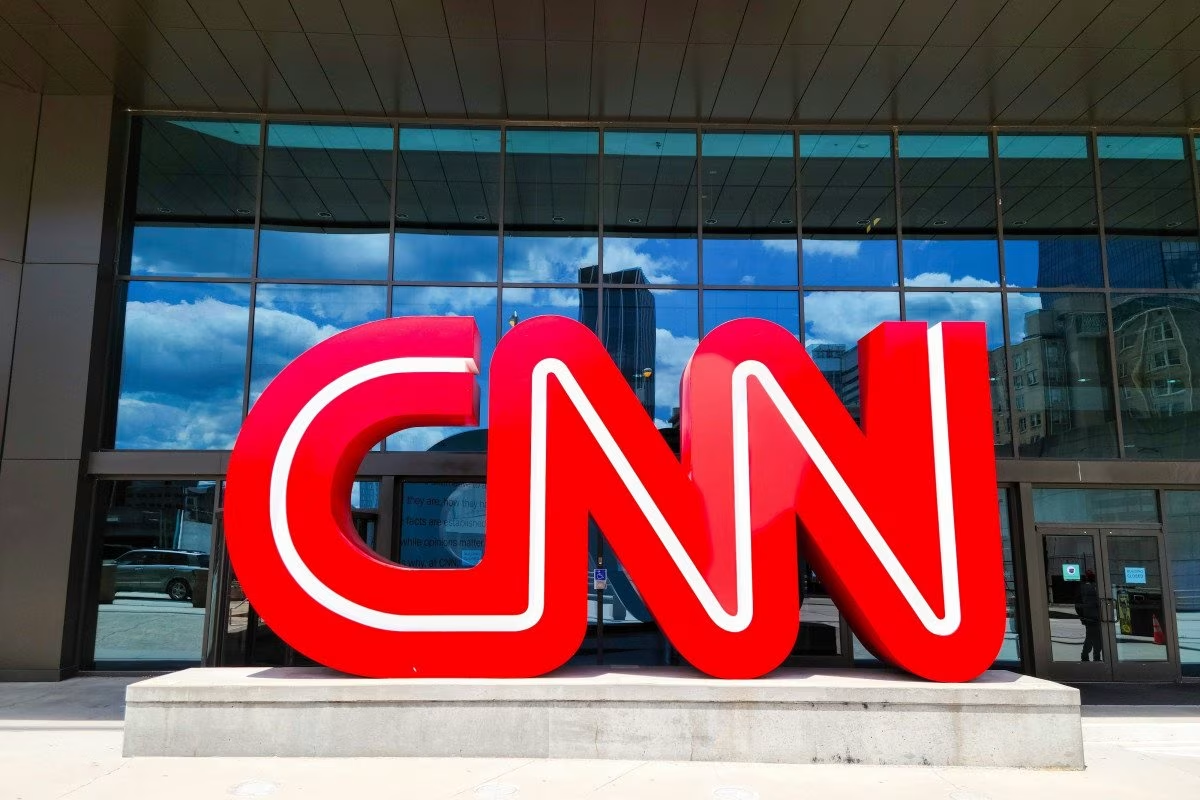
Recent developments within CNN have sparked significant concern regarding the future of the network’s editorial independence as it prepares to fall under the ownership of a figure closely associated with Donald Trump. This transition has prompted a range of responses from within the media industry, with key voices expressing unease about the implications for journalistic integrity and impartial reporting.
The prospect of a takeover by an ally of the former president has not only raised eyebrows among pundits but has also elicited alarm from seasoned journalists within the organisation itself. Christiane Amanpour, a prominent CNN correspondent, has been vocal in her assertions that maintaining editorial independence is paramount. Her sentiments echo a broader anxiety that the network, long considered a bastion of journalistic integrity, may face challenges that could compromise its reporting standards and political neutrality.
As CNN, like many media outlets, navigates the turbulent waters of a rapidly changing media landscape, the implications of ownership shifts are profound. The potential encroachment of partisan influence becomes more pressing in an age where trust in the media is precariously balanced against a backdrop of increasing misinformation and polarisation. Industry observers point to the critical importance of keeping journalistic values intact, particularly at a time when public faith in news media is being continually tested.
Furthermore, this situation underscores a complex intersection of media, politics, and business wherein the dynamics of influence can lead to conflicts of interest. With Trump’s associates at the helm, there are fears that the network may be pressured to slant its coverage, prioritising partisan narratives over independent reporting. Such developments pose a worrying precedent, as they suggest that the critical standards of journalism could be undermined by the interests of those who prioritise political allegiance over factual integrity.
Beyond the walls of CNN, this ownership transition serves as a microcosm of a broader trend sweeping contemporary journalism. The increasing consolidation of media companies, often resulting in ties to political figures, can lead to a homogenisation of viewpoints and a diminishing of diverse perspectives in the news. As layers of ownership tighten around major networks, the challenge for journalists to uphold their commitment to impartiality grows ever more daunting.
Several high-profile examples from recent history illustrate the potential hazards posed by ownership influenced by political dynamics. Instances where news outlets have compromised their editorial integrity to align with the interests of their owners serve as stark reminders of the fragility of journalistic independence. Such cases raise important questions about accountability and the vital role of journalists in safeguarding the public’s right to accurate and unbiased information.
In light of this precarious landscape, many within the industry have called for a recommitment to the principles of ethical journalism, particularly in environments where ownership is increasingly entwined with political motives. It is essential that media organisations remain vigilant and protect their editorial processes from external pressures that threaten to distort reporting and erode public trust.
As CNN faces this new chapter, its journalists are tasked not only with navigating their day-to-day reporting under potentially compromised conditions but also with reinforcing the standards that have long defined their profession. The responsibility to report fairly and accurately is not only a tenet of good journalism but also a requisite in maintaining the public’s faith in the media as a whole.
In an era where the lines between news, entertainment, and opinion continue to blur, the integrity of organisations such as CNN hangs delicately in the balance. The ramifications of this takeover will reverberate not only through the network’s reporting but also across the wider media landscape. As the industry grapples with questions surrounding ownership, influence, and editorial autonomy, the outcomes will likely shape the future of journalism for years to come.
As we hold a mirror to CNN’s situation, it is a timely reminder of the challenges that lie ahead for media organisations striving to uphold journalistic standards. The stakes are high, and the costs of failure could be considerable, not just for CNN, but for the broader field of journalism. A vigilant public, cognisant of these dynamics, will play an indispensable role in demanding accountability and integrity from their media sources, reinforcing the need for journalists to champion the values essential to the craft.
The evolving narrative surrounding CNN serves as both an urgent warning and a clarion call for commitment to journalistic excellence. As the media landscape continues to be shaped by political interests and ownership changes, stakeholders must remain steadfast in their dedication to transparency, truthfulness, and the preservation of an independent watchdog that holds power to account.
Post Disclaimer
The following content has been published by Stockmark.IT. All information utilised in the creation of this communication has been gathered from publicly available sources that we consider reliable. Nevertheless, we cannot guarantee the accuracy or completeness of this communication.
This communication is intended solely for informational purposes and should not be construed as an offer, recommendation, solicitation, inducement, or invitation by or on behalf of the Company or any affiliates to engage in any investment activities. The opinions and views expressed by the authors are their own and do not necessarily reflect those of the Company, its affiliates, or any other third party.
The services and products mentioned in this communication may not be suitable for all recipients, by continuing to read this website and its content you agree to the terms of this disclaimer.
Related Posts