
Now Reading: Ferrari’s Electric Ambition: A Misstep or a Market Evolution?
-
01
Ferrari’s Electric Ambition: A Misstep or a Market Evolution?
Ferrari’s Electric Ambition: A Misstep or a Market Evolution?
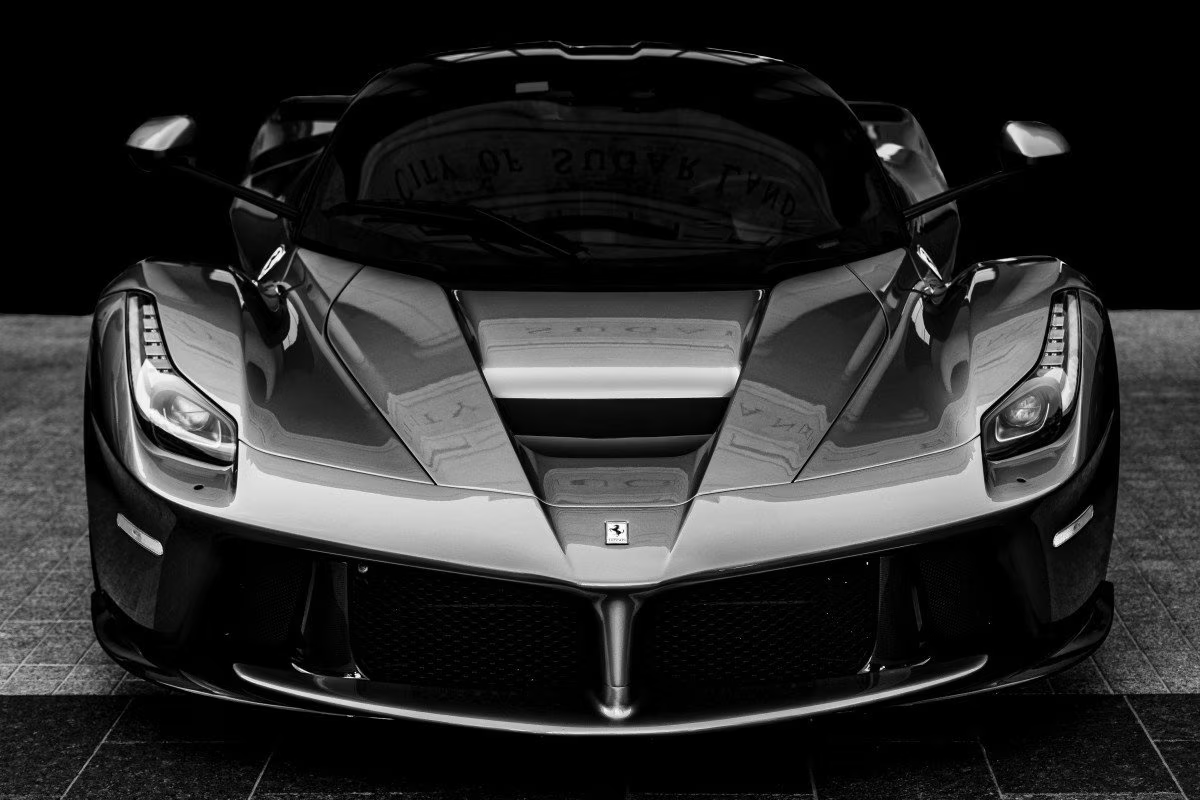
In a bold but controversial move, Ferrari has unveiled its first electric vehicle, the Luce, igniting a fierce debate within automotive circles. While the brand has long been synonymous with high-performance combustion engines and exclusive luxury, the transition to electric power marks a pivotal moment not only for the Prancing Horse but also for the broader automotive landscape. Critics and fans alike are questioning whether this announcement reflects a genuine evolution or an ill-considered step into a crowded marketplace.
The launch has not been without its complications. Observers have pointed to striking similarities between the Ferrari Luce and the Nissan Leaf, a vehicle well-known for its affordability and practical engineering, compared to the lofty aspirations and premium price tag associated with Ferrari. This comparison has sparked derision among enthusiasts who believe that a brand of Ferrari’s stature should be offering something far more innovative than a vehicle perceived as ‘just another electric car’.
Ferrari’s decision to venture into the electric segment arrives against a backdrop of increasing demand for eco-friendly vehicles. Governments around the world are pushing for a reduction in carbon emissions, influencing consumer preferences towards electric cars. Yet, in a market teeming with options, Ferrari finds itself at a crossroads. It aims to retain its storied identity while also appealing to an audience that may not necessarily associate the marque with environmental awareness.
The Luce’s pricing, comparable to that of Lamborghini and Aston Martin models, raises further eyebrows. Many critics have pointed out that the Ferrari brand is now positioned to sell a vehicle that critics say lacks the revolutionary features one might expect at such a high price point. The scrutiny of its appearance has also contributed to a sense of disappointment among aficionados who have been loyal to the brand’s storied legacy.
This controversy is amplified by the inherent tensions within the company. Ferrari has spent decades cultivating an image of exclusivity and performance — an image built on the roaring engines and the visceral experience of driving that electric vehicles have yet to replicate. With the Luce, Ferrari faces the daunting task of redefining what it means to be a luxury sports car within the realm of electric vehicles.
The mixed reception reflects broader challenges that traditional manufacturers encounter in an era dominated by tech-driven disruptors. New players in the automotive sector, such as Tesla, have transformed consumer expectations about electric cars, enhancing perceptions of performance, style, and desirability. Such comparisons place immense pressure on legacy brands to innovate, often within a challenging financial landscape; a landscape where balancing profitability with sustainable development becomes increasingly difficult.
The Luce is not merely an electric vehicle; it signals Ferrari’s commitment to the future. Yet, the path it occupies is laden with challenges not just from rivals in the luxury segment but also from a market that grows ever more discerning about what it values in automobiles. While Ferrari may trust its legacy will carry it through the transition, brand loyalty can dissipate quickly in a competitive marketplace, where younger consumers are often driven by different sentiments and principles.
For Ferrari, the ongoing narrative will hinge on its ability to deliver not just a product but an experience that satisfies the core values of its brand while embracing an electric future. The question remains whether the Luce can embody the same allure and excitement that has made Ferrari one of the most desirable names in motoring history, or whether it will be seen as a calculated pivot that, perhaps, has gone awry.
As the dust settles on the initial reactions, the market will ultimately dictate the success of Ferrari’s electric endeavour. The automotive industry stands poised at a critical juncture, and how traditional brands respond to the shifting landscape will define their relevance in the coming years. A successful adaptation might not only preserve a legacy but could also secure a prominent place in the future of sustainable luxury.
With the electrification of personal transport inexorably progressing, Ferrari’s foray into this domain raises broader questions about the evolution of luxury in a time of heightened environmental accountability. The essence of performance, speed, and passion for which Ferrari is revered must find its way into the evolution of its product line, even as it taps into the electric revolution. As manufacturers of all stripes strive to navigate this new terrain, the Luce serves as a microcosm of the challenges they must tackle to retain consumer loyalty amidst transformative change.
Post Disclaimer
The following content has been published by Stockmark.IT. All information utilised in the creation of this communication has been gathered from publicly available sources that we consider reliable. Nevertheless, we cannot guarantee the accuracy or completeness of this communication.
This communication is intended solely for informational purposes and should not be construed as an offer, recommendation, solicitation, inducement, or invitation by or on behalf of the Company or any affiliates to engage in any investment activities. The opinions and views expressed by the authors are their own and do not necessarily reflect those of the Company, its affiliates, or any other third party.
The services and products mentioned in this communication may not be suitable for all recipients, by continuing to read this website and its content you agree to the terms of this disclaimer.
Related Posts


Previous Post
Next Post

