
Now Reading: Lotus Emira: A Bastion of British Engineering Faces a Crossroads
-
01
Lotus Emira: A Bastion of British Engineering Faces a Crossroads
Lotus Emira: A Bastion of British Engineering Faces a Crossroads
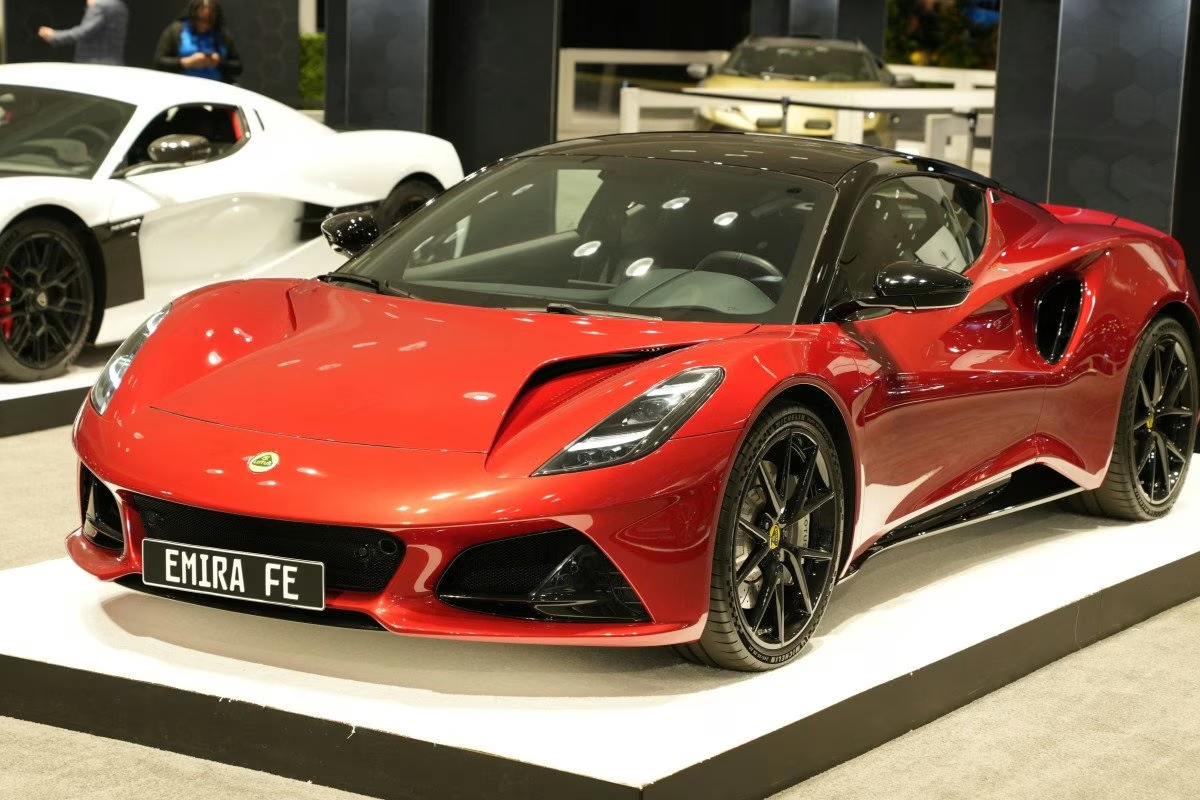
The Lotus Emira, the latest offering from the renowned British sports car manufacturer, finds itself at a critical juncture as it navigates the tempestuous waters of the automotive industry. With the backdrop of its historic factory in Hethel, Norfolk, the company grapples with a dual challenge: maintaining its British heritage while responding to a complex global market landscape shaped significantly by shifting consumer preferences and regulatory pressures. The stakes are notably high, not just for the future of this iconic brand but also for the livelihoods of its employees and the broader UK automotive sector.
In recent statements, Qingfeng Feng, the chief executive of Lotus, affirmed the company’s commitment to its UK operations amidst speculation surrounding potential closures under its Chinese parent company, Geely. This declaration came on the heels of significant personnel cuts and an urgent call for government support to foster the factory’s future. The pressure to sustain employment levels and ensure the viability of the plant underscores the delicate balance between preserving British engineering prowess and operating within the confines of a modern, increasingly electrified automotive ecosystem.
The Emira, which carries an impressive starting price of approximately £80,000, is a potent symbol of Lotus’s dedication to high-performance petrol-engine sports cars. With its production now extended to cater to the American market, the car not only represents a tribute to the brand’s storied past but also serves as a pivotal player in its forward-looking strategy. The decision to continue making petrol models, a departure from earlier pledges to focus solely on electric vehicles, epitomises Lotus’s adaptive approach to market realities, especially as anticipation around electric sports cars has so far failed to materialise into robust demand.
Lotus currently produces around 2,000 vehicles annually at its specified capacity of 10,000, a fact that highlights both the potential for expansion and the constraints faced by the factory. As fluctuating tariffs affect the company’s ability to source and sell vehicles in different markets, Lotus’s reliance on its British facilities becomes even more acute. The US market, showing promise with a significant customer base, has been particularly pivotal, accounting for nearly two-thirds of sales. With impending limitations on tariffs for British vehicles creating an environment of competitive advantage, Lotus appears strategically positioned, even as it seeks to mitigate vulnerabilities linked to its supply chain and production capabilities.
The historically rich landscape of Lotus saw its inception as a manufacturer that prioritised lightweight design and nimbleness through the genius of its founder, Colin Chapman. As the brand stands now, it is wrestling with the implications of ownership by Geely, a conglomerate that has been building an expansive automotive empire across Europe and Asia. While Geely’s influence has surely injected capital and resources into Lotus, questions linger regarding the direction of the company as it navigates the complexities of ownership stakes around several other prestigious automotive brands within competitive markets. This situation raises the issue of whether Lotus can maintain its identity while evolving under a multinational umbrella.
The reality of the current political and economic climate amplifies the challenges facing British manufacturers. Ongoing discussions between Lotus executives and the UK government underscore a critical need for infrastructure support beyond merely financial incentives. Enhancing the operational framework around the Hethel plant could ease the pathway for production while ensuring that Lotus can leverage its historic roots as a selling point. Feng has made it clear that any such collaboration with the government would be mutually beneficial, aligning interests to fortify a sector that is increasingly feeling the pressures of international competition.
The discussions around localising parts of the supply chain reflect an attempt to not only reduce operational risks but also bolster the factory’s output. Collaborations with UK battery manufacturers signal a strategic pivot towards innovation while reaffirming Lotus’s commitment to the UK economy. This shift dovetails with broader industry trends pushing for sustainability and electrification, offering avenues for Lotus to explore hybrid and electric options that resonate with environmentally conscious consumers.
In parallel to these strategic developments, Lotus has unveiled plans for new models, such as the Type 135, which promises a hybrid-V8 petrol supercar. This approach seeks to balance performance with a nod to the decreasing demand for premium petrol-only vehicles. Despite prior affirmations to abandon petrol models entirely, the reorientation towards hybrids appears a prudent acknowledgment of market dynamics. Critics may contend that this compromise represents an identity crisis for the brand; however, supporting the Emira’s production extends Lotus the necessary time to cultivate its electric ambitions intelligently.
The backdrop against which these challenges unfold is further complicated by Geely’s recent restructuring efforts born from overreach in its expansion efforts. As the Chinese automotive landscape encounters obstacles in the shift towards electrification, Lotus remains tethered to a market that has shown varied responses to electrified vehicles. With electric offerings failing to ignite enthusiasm among consumers, Lotus’s strategy of hybridisation positions it to engage a broader audience while maintaining its performance pedigree—a key aspect of the brand’s allure.
As the focus shifts toward the future, aspirations of ramping up sales from a target of 150,000 vehicles by 2028 to a more tempered goal of 30,000 reflect an effort to realign ambitions with market realities. This recalibration is emblematic of the pressures facing many legacy brands in an era of unprecedented change within the automotive sector. As Lotus undertakes feasibility studies for new models and potential production enhancements, the urgency to respond to market needs without sacrificing core values remains paramount.
The progress made thus far serves as a testament to Lotus’s resilient spirit, yet it is equally clear that the path forward is laden with complexity. Issues regarding the supply chain, government collaboration, and international competition must be navigated with considered foresight. As the landscape shifts, the emphasis on hybridisation and the extension of petrol models signals not only a strategic re-orientation but possibly a redefinition of what it means to be a sports car manufacturer in a world increasingly leaning towards sustainability.
Ultimately, the Lotus Emira represents more than mere machinery or engineering prowess; it encapsulates the spirit of a brand striving to maintain its heritage while evolving to meet the demands of contemporary society. A commitment to British manufacturing, an urgent dialogue with policymakers, and a rigorous focus on innovation appear to be the cornerstones upon which Lotus will build its future. In doing so, the marque not only preserves its legacy but aims to carve a path that resonates with both dedicated enthusiasts and a new generation of discerning consumers navigating an evolving automotive landscape.
Post Disclaimer
The following content has been published by Stockmark.IT. All information utilised in the creation of this communication has been gathered from publicly available sources that we consider reliable. Nevertheless, we cannot guarantee the accuracy or completeness of this communication.
This communication is intended solely for informational purposes and should not be construed as an offer, recommendation, solicitation, inducement, or invitation by or on behalf of the Company or any affiliates to engage in any investment activities. The opinions and views expressed by the authors are their own and do not necessarily reflect those of the Company, its affiliates, or any other third party.
The services and products mentioned in this communication may not be suitable for all recipients, by continuing to read this website and its content you agree to the terms of this disclaimer.
Related Posts


Previous Post
Next Post

