
Now Reading: Hantavirus Outbreak on MV Hondius Sparks Global Concerns
-
01
Hantavirus Outbreak on MV Hondius Sparks Global Concerns
Hantavirus Outbreak on MV Hondius Sparks Global Concerns
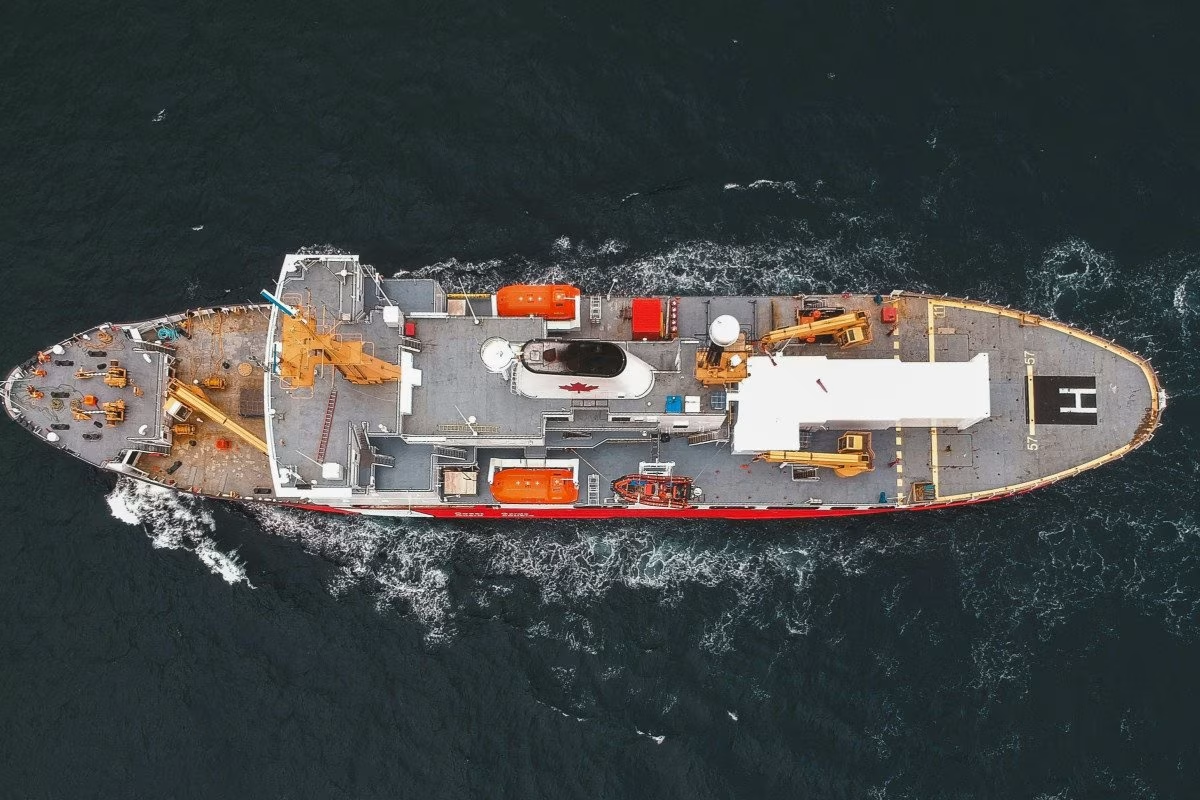
In a troubling turn of events, the MV Hondius, a cruise ship traversing the South Atlantic, has become the epicentre of a hantavirus outbreak, affecting 148 passengers on board. As health authorities around the world scramble to respond, the situation has escalated to a point where traders on the prediction market platform Polymarket are now wagering on the possibility of a pandemic triggered by the virus, which has already resulted in three confirmed fatalities. With predictions suggesting a ten per cent likelihood of a significant global outbreak, public health officials are monitoring the situation closely, and the stakes have never been higher.
The hantavirus is notorious for its association with rodent populations, predominantly affecting species such as mice, rats, and voles. Humans are primarily infected through exposure to rodent droppings, urine, or saliva, with symptoms ranging from mild flu-like manifestations to acute illnesses that can involve respiratory failure, kidney complications, and even internal bleeding. As cases have been confirmed aboard the Hondius, the implications are severe and far-reaching, not just for those aboard but for public health infrastructures worldwide.
Following the emergence of two confirmed cases alongside five additional suspected instances, the World Health Organisation has begun coordinating efforts to trace individuals who may have been exposed. Health authorities have extended their reach to various countries, including the United States, the United Kingdom, France, and South Africa, among others, as passengers disembarking the ship have made their way across the globe. The urgent need for tracking these contact chains illustrates the delicate nature of managing infectious diseases that can escalate rapidly into more serious threats.
The Polymarket platform, which has garnered attention for allowing users to place bets on predictions related to significant events, now features a market focused on the potential for a hantavirus pandemic in 2026. The platform boasts an impressive trading volume of $693,000, suggesting fervent engagement from its community. Participants are backing a ‘yes’ outcome with a clear interest in whether the WHO will officially classify these cases as a pandemic before the year’s end. The concept that financial speculation could sway public sentiment regarding a health crisis raises critical ethical questions about the intersection of gambling and public health.
The implications of a full-scale hantavirus outbreak would be dire, and early indicators are poorly reassuring. The initial flu-like symptoms frequently progress to severe forms of the disease, enhancing the appeal of predictive markets as they promise to provide insights into public perceptions about the unfolding situation. Critics point out that such betting platforms can commodify tragedies and human suffering, with accusations surfacing that they contribute to a troubling trend of profiting from death and disaster, even as they claim to offer a unique perspective on societal anxieties.
As speculation circulates, the necessity for robust information disseminated by health authorities becomes increasingly pressing. The absence of a vaccine or specific antiviral treatment for hantavirus infections complicates the scenario further. This medical vacuum intensifies the urgency of establishing effective protocols for managing contagion and underscores the foundational importance of preventive measures in averting a potential pandemic.
The situation aboard the MV Hondius is emblematic of broader public health challenges operating at the nexus of human behaviour and environmental factors. With the increasing encroachment of humans into wildlife habitats, the risk of zoonotic diseases—those transferred from animals to humans—has risen dramatically. Factors such as climate change and urbanisation exacerbate these risks, suggesting that the global community remains woefully unprepared for emerging infectious diseases.
Yet, amidst crisis, there are lessons to be learned. Historical patterns demonstrate that timely intervention can mitigate the impact of outbreaks. Collaborations across national and international borders must be fortified as public health systems seek to develop greater resilience in the face of dual threats: the zoonotic diseases themselves and the spectre of public panic that can follow in their wake. As we observe the unfolding events on the MV Hondius, it is essential to remain vigilant and responsive, understanding that our interconnectedness is both a strength and a vulnerability in combating global health crises.
Post Disclaimer
The following content has been published by Stockmark.IT. All information utilised in the creation of this communication has been gathered from publicly available sources that we consider reliable. Nevertheless, we cannot guarantee the accuracy or completeness of this communication.
This communication is intended solely for informational purposes and should not be construed as an offer, recommendation, solicitation, inducement, or invitation by or on behalf of the Company or any affiliates to engage in any investment activities. The opinions and views expressed by the authors are their own and do not necessarily reflect those of the Company, its affiliates, or any other third party.
The services and products mentioned in this communication may not be suitable for all recipients, by continuing to read this website and its content you agree to the terms of this disclaimer.
Related Posts


Previous Post
Next Post

