
Now Reading: Lloyds Banking Group Considers the Future of Halifax Brand: A Sign of Changing Times
-
01
Lloyds Banking Group Considers the Future of Halifax Brand: A Sign of Changing Times
Lloyds Banking Group Considers the Future of Halifax Brand: A Sign of Changing Times
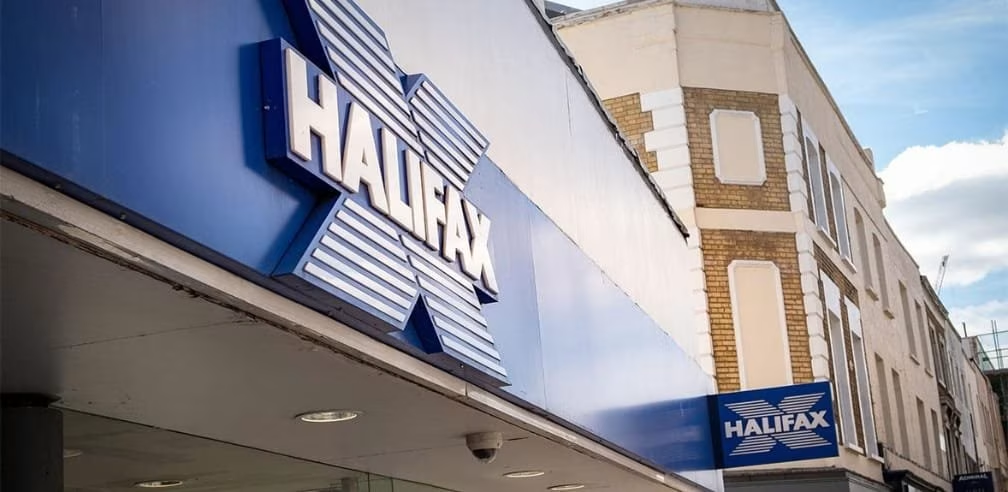
In a move that could mark the end of an era, Lloyds Banking Group is contemplating a significant rebranding strategy that would phase out the Halifax name, a brand that has been part of the British financial landscape for 173 years. This potential shift, reported by The Sun, reflects broader trends in the banking sector, as institutions seek to streamline operations and consolidate brand identities in an increasingly competitive marketplace.
Although no final decision has been made, sources indicate that the intention is to cease new customer acquisitions under the Halifax brand by October this year. If the transition proceeds, existing Halifax customers will not face disruptions, as account numbers and customer protections, including those under the Financial Services Compensation Scheme, are expected to remain intact. This news raises questions about the future role of well-established brands in banking and what it means for customer loyalty in a sector characterised by rapid technological change.
The Halifax brand itself has its roots in the Industrial Revolution, a period marked by profound social and economic upheaval. Established in 1852 as the Halifax Permanent Benefit Building Society, it was formed to address a housing shortage exacerbated by the influx of workers into burgeoning towns across England. The institution allowed individuals to deposit their savings and, in return, offered loans that would enable them to purchase or construct homes. Over the years, Halifax evolved into the largest building society in the world, acquiring rival institutions and significantly expanding its operations.
In 2001, Halifax merged with the Bank of Scotland to create HBOS, which became the fifth-largest lender in the UK. This merger was emblematic of the broader trend of consolidation within the banking industry, driven by the need for scale and the pressures of regulatory compliance. However, the history of HBOS was marred by controversy as it became one of the key players in the financial crisis that rocked the global economy in 2008. Following heavy losses, the banking group required a substantial bailout from the government, leading to its eventual acquisition by Lloyds TSB in a deal worth £12 billion. This watershed moment fundamentally altered the landscape of UK banking, creating a behemoth that combined numerous brands and services under one umbrella.
Fast forward to the present, and the current deliberations regarding the Halifax brand highlight not only the evolving priorities of Lloyds Banking Group but also the broader implications for customer engagement in a digital age. Banking brands, once seen as bastions of trust and reliability, now face increasing competition from fintech startups and digital-only challengers that promise a more engaging customer experience. The traditional value propositions of banking are being redefined, necessitating a rethink of how legacy brands like Halifax perceive their place in the market.
Lloyds representatives have reassured customers that any changes made to the brand will not alter their existing account structures, services, or protections. The overarching message from the bank is one of continuity. Customers using Halifax accounts will soon have the full capability to manage their finances through a unified app, similar to the experience offered by other brands within the Lloyds family, such as Bank of Scotland. A spokesperson stated that the group frequently assesses how its brands can best support its customers, reflecting an understanding that the future of banking must prioritise convenience and digital engagement.
This pivot towards consolidation raises crucial questions about brand power in a market that is increasingly data-driven rather than reliant on historical perceptions. It posits whether a rich legacy—whether measured in years of service or a distinctive identity—can withstand the forces of change that are reshaping how consumers view financial institutions. As customers’ needs evolve and technology accelerates, banks may find that the historical weight of their brands is less significant than the agility and innovation they can offer.
The decision looming over Halifax may also serve to illuminate the broader criticisms and challenges that traditional banks face today. Many consumers have expressed frustrations at the perceived lag in service delivery, with numerous institutions branded as slow to adapt to modern trends. As these large entities navigate the digital transformation and feasibility of mergers and acquisitions, there remains a palpable tension between safeguarding heritage and embracing modernity.
While Halifax may soon cease to exist as a standalone name, its legacy will endure through a blend of contemporary banking services that retain its core principles. From the company’s inception to its transformation into a member of the Lloyds Banking Group, Halifax has been entrenched in the fabric of British life, offering generations of customers a gateway to home ownership and financial stability. Yet whether that legacy can translate into relevance within a swiftly progressing industry remains to be seen.
As the summer approaches and Lloyds Banking Group prepares to announce its decisions, all eyes will be on the management’s approach to integrating Halifax’s identity into a broader corporate strategy. The banking sector has fought hard to regain consumer trust after the 2008 crash, and the intricacies of this transformation will be watched closely, both by competitors and consumers alike. It remains essential that Lloyds balances any restructuring with the demonstrated values of reliability, security, and service that have historically underpinned the Halifax brand.
This change in branding is not merely a corporate shift; it is emblematic of how financial institutions must adapt to survive in a world increasingly driven by digital capabilities, shifting consumer expectations, and regulatory pressures. For Halifax, a proud name that once dominated UK housing finance, its fate reflects a critical juncture in banking—a moment that challenges the industry to rethink what it means to truly serve and retain customers in an era where loyalty can feel ephemeral.
Whether Lloyds Banking Group’s strategy crystallizes into the phasing out of the Halifax name or not, the implications of this decision will reverberate throughout the banking industry for years to come. It offers a window into a future where traditional identifiers may no longer hold the same power as they once did. As financial transactions become increasingly seamless and technologically driven, one wonders whether any brand can remain unscathed in the face of inevitable change.
Post Disclaimer
The following content has been published by Stockmark.IT. All information utilised in the creation of this communication has been gathered from publicly available sources that we consider reliable. Nevertheless, we cannot guarantee the accuracy or completeness of this communication.
This communication is intended solely for informational purposes and should not be construed as an offer, recommendation, solicitation, inducement, or invitation by or on behalf of the Company or any affiliates to engage in any investment activities. The opinions and views expressed by the authors are their own and do not necessarily reflect those of the Company, its affiliates, or any other third party.
The services and products mentioned in this communication may not be suitable for all recipients, by continuing to read this website and its content you agree to the terms of this disclaimer.
Related Posts


Previous Post
Next Post

