Now Reading: South East Water Faces Financial Crisis as Cash Reserves Deplete
-
01
South East Water Faces Financial Crisis as Cash Reserves Deplete
South East Water Faces Financial Crisis as Cash Reserves Deplete
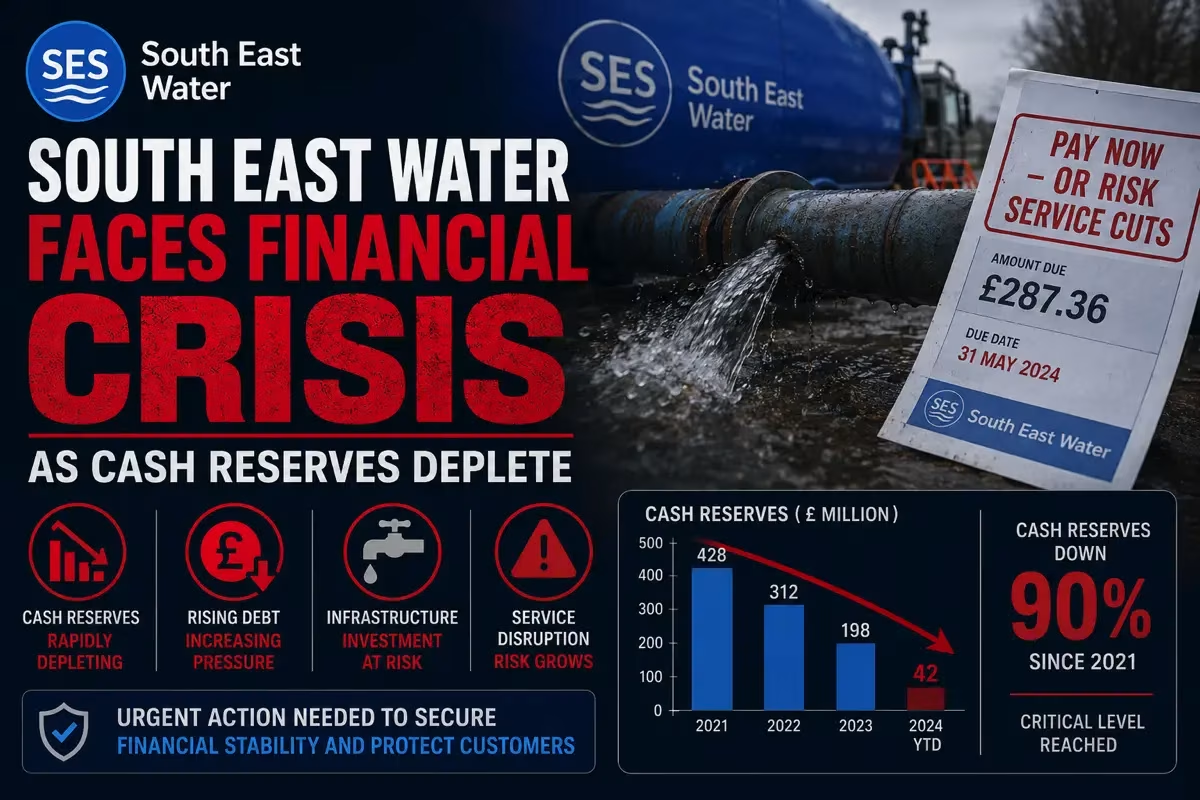
South East Water has issued a material uncertainty warning regarding its ability to continue as a going concern, following a catastrophic year marked by substantial regulatory fines and senior management departures. The utility, which serves 2.4 million customers across Kent, Sussex, Surrey, Hampshire and Berkshire, has disclosed that its current financial resources will sustain operations only until July 2027.
In its annual report published on Friday, the company confirmed that it will require new loan facilities shortly after this date to maintain operational continuity. Whilst the supplier indicated that negotiations with potential lenders have reached an advanced stage and are anticipated to conclude during summer 2026, no legally binding commitments have been secured. The directors acknowledged that the absence of confirmed funding arrangements constitutes a material uncertainty over the company’s future viability.
The utility has endured one of its most challenging periods since privatisation in 1989. A succession of service disruptions between November and January provoked widespread condemnation from customers and political figures alike. The operational failures prompted the resignation of chairman Chris Train, whilst chief executive David Hinton has pledged to step down following sustained criticism of the company’s response to major supply failures affecting customers in Kent and Sussex.
Regulatory pressure intensified this week when Ofwat, the water regulator for England and Wales, announced that South East Water would be required to pay a £30.5 million redress package relating to these outages and other service failures. This penalty has placed additional strain on the company’s already precarious financial position.
Operational challenges persisted into recent months, with the company implementing a hosepipe ban in Kent last month. South East Water attributed this measure to elevated temperatures resulting from climate change, noting that extreme weather events fuelled by global heating are becoming both more severe and more frequent, apparently accelerating beyond previously observed rates.
The financial distress at South East Water highlights broader sectoral difficulties facing the incoming government, with Prime Minister Andy Burnham reportedly considering placing Thames Water into special administration, a form of temporary nationalisation.
The annual accounts revealed a deteriorating financial performance, with losses expanding to £33 million from £14 million in the previous year. This occurred despite revenues increasing from £285 million to £352 million, enabled by Ofwat’s approval of a 7% rise in customer bills. The company currently bears annual finance costs of £80 million, which could escalate if lenders demand higher interest rates on new borrowing facilities.
South East Water has indicated it may need to access non-traditional credit markets and high-yield alternative credit providers, including hedge funds and private debt investors, should conventional banks and mainstream lenders prove unwilling to extend financing. At the end of June, the company held £90 million in cash drawn from a revolving credit facility, sufficient to cover 14 months of operations.
Executive remuneration disclosures showed that Hinton’s total compensation increased to £488,000 from £458,000 the previous year, despite foregoing his bonus under parliamentary pressure. His planned departure means he will not receive a controversial £400,000 service award that would have been payable had he remained until July 2030. John Halsall, who previously held positions at South West Water, Network Rail and Thames Water, will assume the chief executive role.
The company’s ownership structure comprises the NatWest Group Pension Fund, the Utilities Trust of Australia and the Desjardins cooperative financial group based in Quebec, Canada. These shareholders injected £200 million of new capital in May 2025, following a £75 million contribution in December 2024.
In related industry developments, United Utilities experienced significant shareholder opposition on Friday regarding executive compensation proposals for chief executive Louise Beardmore. Some 24% of shareholders voted against the revised remuneration policy for directors, following a recommendation from Institutional Shareholder Services to reject the proposal on grounds that it increased compensation without performance linkage. The company, which provides water and sewerage services to 7.3 million customers across north-west England, intends to provide Beardmore with a £435,000 annual allowance that may circumvent the government’s bonus prohibition.
A United Utilities spokesperson defended the remuneration structure, stating that executive compensation is not funded by customer revenues and emphasising the necessity of timebound and targeted retention payments to secure appropriate leadership talent.
Post Disclaimer
The following content has been published by Stockmark.IT. All information utilised in the creation of this communication has been gathered from publicly available sources that we consider reliable. Nevertheless, we cannot guarantee the accuracy or completeness of this communication.
This communication is intended solely for informational purposes and should not be construed as an offer, recommendation, solicitation, inducement, or invitation by or on behalf of the Company or any affiliates to engage in any investment activities. The opinions and views expressed by the authors are their own and do not necessarily reflect those of the Company, its affiliates, or any other third party.
The services and products mentioned in this communication may not be suitable for all recipients, by continuing to read this website and its content you agree to the terms of this disclaimer.
Related Posts


Previous Post
Next Post