Now Reading: New EU Border System Tripling Passport Control Times Airport Officials Confirm
-
01
New EU Border System Tripling Passport Control Times Airport Officials Confirm
New EU Border System Tripling Passport Control Times Airport Officials Confirm
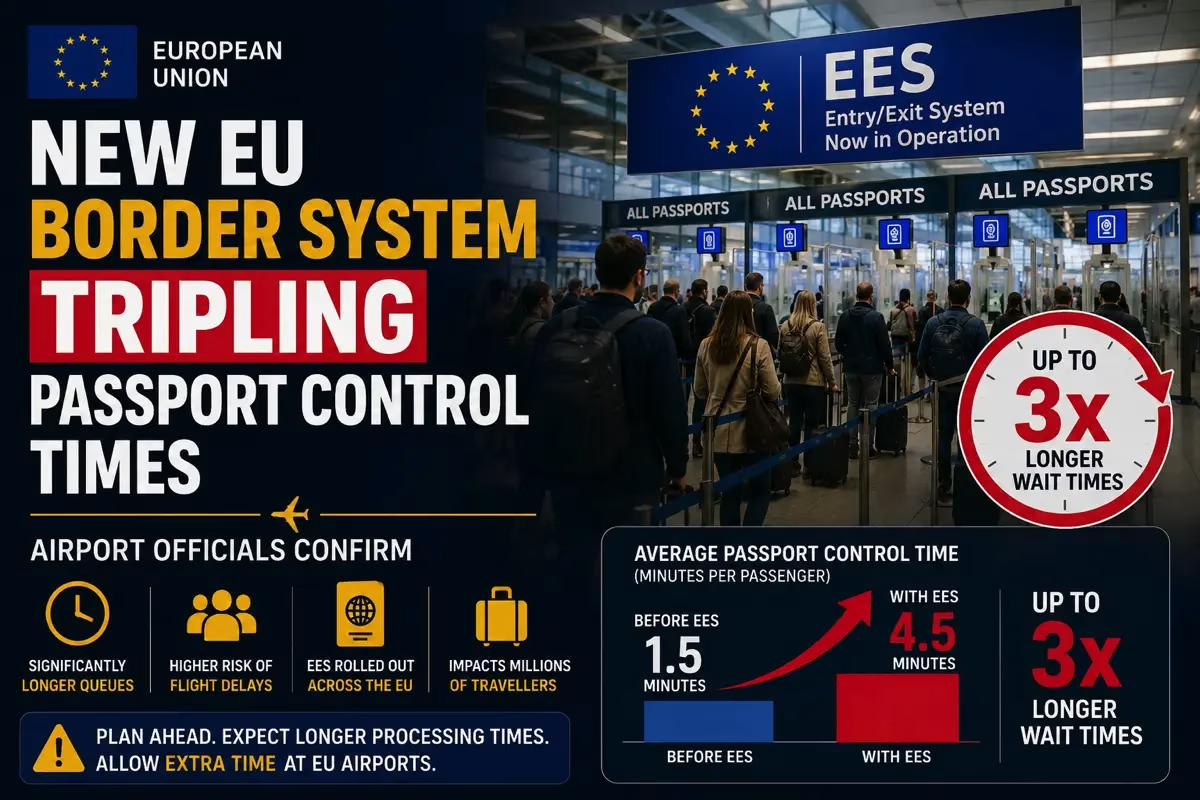
The European Union’s Entry Exit System has nearly tripled processing times for British travellers at passport control, despite recent improvements to the controversial border framework, according to senior management at Rome’s principal airport.
Ivan Bassato, Chief Aviation Officer at Fiumicino Airport, confirmed that processing times for UK nationals have risen from seven minutes to 20 minutes since the system’s implementation. The disclosure comes as Ryanair issued warnings to passengers travelling to Europe this summer to anticipate extended delays at border checkpoints.
The digital Entry Exit System mandates non-EU citizens entering the Schengen area, comprising 29 European countries, to register fingerprints and facial photographs upon arrival. The biometric data is subsequently verified upon departure through standalone automated kiosks or, in the case of children under 12, with border officers.
The phased implementation of the new procedures and machinery, which commenced in October, has resulted in substantial queuing at numerous European airports. Passenger reports have documented instances of missed return flights due to hours-long delays at passport control.
Ryanair characterised the situation as a “failed EES rollout” responsible for unnecessary delays and extensive queues. The carrier advised UK passengers to allocate additional journey time and prepare for prolonged waits at passport control facilities.
In Rome, a perennially popular destination for British tourists, travellers reported waiting periods of up to two hours to clear border control. One Yorkshire family travelling with young children described a two-hour queue from disembarkation to immigration clearance. Similar delays were reported at Barcelona airport, where passengers experienced 45 to 50 minute waits, with some delays approaching the duration of their actual flights.
Rome’s Fiumicino airport has determined that processing large passenger volumes through self-service kiosks, which cost 12 million euros, proved impractical. UK nationals can now register biometric data at passport e-gates rather than utilising the standalone machines, though children under 12 must still proceed to border officers.
Bassato acknowledged that whilst integration with e-gates “improved things significantly”, the system’s complexity ensures processing times remain substantially elevated compared to pre-EES standards. The airport executive stated the facility was “absolutely not okay with” waiting periods of one or two hours and emphasised the urgent need to rectify certain aspects of the system.
The aviation official advocated for authorities to eliminate duplication within the process and called for broader adoption of the EU’s pre-registration application, currently utilised by only Sweden and Portugal amongst member states.
Whilst participating countries retain the ability to suspend EES under exceptional circumstances, airports and airlines have lobbied the European Commission to permit states to proactively suspend the process ahead of peak travel periods. A meeting earlier this month, however, yielded no policy modifications.
At Portugal’s Faro airport, Superintendent Pedro Oliveira, responsible for border control operations, confirmed that queues previously resolved within 10 minutes now exceed 30 minutes. Whilst he maintained that waits surpassing one hour remained extremely rare, he acknowledged such delays could potentially occur if more aircraft than anticipated arrived simultaneously.
Supt Oliveira disclosed that the EU’s information technology infrastructure has experienced technical faults. He noted that the system’s interconnected server architecture means technical issues in one location can affect facilities across the network. He stated that server crashes have occasionally affected all member states concurrently, requiring several minutes for system reboots, though such incidents have decreased in frequency.
The European Commission has maintained that disruption at most EU airports remains limited and pledged continued support to member states during the system’s implementation.
The Entry Exit System represents a significant shift in border management protocols for the Schengen area, with implications for travel flows and airport operational capacity across the European Union.
Post Disclaimer
The following content has been published by Stockmark.IT. All information utilised in the creation of this communication has been gathered from publicly available sources that we consider reliable. Nevertheless, we cannot guarantee the accuracy or completeness of this communication.
This communication is intended solely for informational purposes and should not be construed as an offer, recommendation, solicitation, inducement, or invitation by or on behalf of the Company or any affiliates to engage in any investment activities. The opinions and views expressed by the authors are their own and do not necessarily reflect those of the Company, its affiliates, or any other third party.
The services and products mentioned in this communication may not be suitable for all recipients, by continuing to read this website and its content you agree to the terms of this disclaimer.
Related Posts


Previous Post
Next Post