
Now Reading: The Impact of Commodity Prices on the Dairy Industry: A Looming Crisis in British Farming
-
01
The Impact of Commodity Prices on the Dairy Industry: A Looming Crisis in British Farming
The Impact of Commodity Prices on the Dairy Industry: A Looming Crisis in British Farming
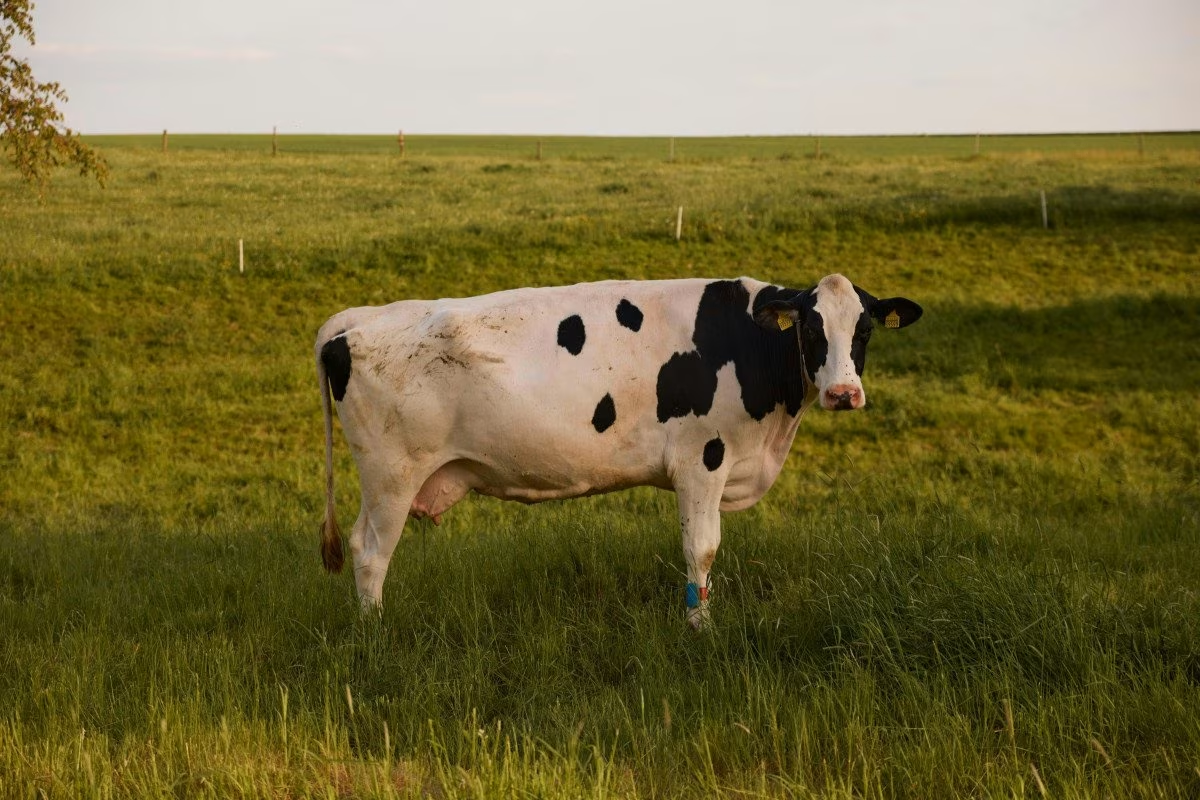
The landscape of British dairy farming is undergoing a tumultuous transformation, accentuated by fluctuating commodity prices that threaten the very sustainability of the industry. Recent statistics reveal that many dairy farmers are currently operating on the precipice of financial viability, with milk prices plummeting by 30 per cent compared to the previous year. This alarming trend reflects a broader crisis within the agricultural sector, one that has dimensions beyond mere economics, touching on social and environmental concerns.
Pivotal in this ongoing saga is Rachel Reeves, the Labour Party’s Shadow Chancellor, whose recent proposals to cap the prices of supermarket essentials have set the tone for fierce debate. While cloaked in the rhetoric of consumer protection, these plans raise significant alarm bells among farmers struggling to remain solvent. The prospective imposition of price controls may, in fact, exacerbate the plight of dairy producers, many of whom have already seen their profit margins eroded by rising operational costs and a competitive retail environment that favours large corporate players over local producers.
The context within which these discussions are occurring cannot be overstated. The cost of living crisis, interwoven with supply chain disruptions and geopolitical factors such as the ongoing unrest in Ukraine, has led to significant increases in feed and energy prices. British dairy farmers, already contending with these logistical challenges, now face the added pressure of potential price caps that could further diminish their earnings.
Research indicates that the average farm gate price—the amount farmers receive for their milk—has failed to keep pace with inflation. This discrepancy effectively means that dairy farmers are selling their product at a loss, unable to cover the rising costs of production. The result is a precarious scenario where many producers are either operating at break-even or are experiencing outright losses. As these economic realities set in, the threat of farm closures becomes ever more tangible.
Further complicating matters is the shift in consumer behaviour. While the public has become increasingly conscious of price sensitivity in times of rising costs, a lack of understanding regarding the complexities of food production remains pervasive. Consumers may not fully grasp that capping essential goods prices could set off a ripple effect throughout the agricultural supply chain, ultimately leading to reduced availability of products and jeopardising local farming communities.
The predicaments faced by dairy farmers are amplified by the overarching legislative environment governing agricultural policies. Brexit has led to radical shifts in trade agreements that initially promised to support British farmers, yet have frequently failed to materialise. Trade tariffs and quotas designed to protect domestic production have often shifted towards favouring imported dairy products, flooding the market with cheaper alternatives that are less concerned with the welfare of local producers. This liberalisation of the market is reminiscent of the earlier European Union era for farmers, yet without the same safety nets that were previously in place.
However, it is not merely economic forces at play. The health of the dairy industry taps into deeper questions regarding agricultural practices, environmental stewardship, and societal expectations. The drive for sustainability has pushed forward initiatives aimed at reducing carbon footprints, yet these strategies often come without corresponding financial support for farmers transitioning to more environmentally conscious practises. The complex interplay between environmental objectives and economic realities cannot be ignored; farmers may find themselves caught between meeting regulatory standards and ensuring their farms remain viable.
Livestock emissions and concerns regarding animal welfare continue to be contentious issues. Farmers are now tasked with striking a balance between adhering to stricter regulations and maintaining production levels that allow for profitability. This constraint can serve to dissuade the next generation from investing in dairy farming, as the industry struggles to offer a clear path forward amidst these conflicting demands.
The consequences of these multifaceted challenges extend beyond economics; they carry social ramifications as well. Rural communities that have historically relied on dairy farming for their livelihoods are now faced with uncertainty. The depopulation of these areas becomes a tangible threat, as younger generations migrate toward urban centres in search of more stable employment opportunities. As more farms close due to unsustainable practices or unfavourable market conditions, the rural landscape shifts, risking the very fabric of communities that have existed for generations.
Echoing these sentiments, industry leaders are calling for a re-evaluation of governmental support mechanisms that could help bolster the sector. A coalition of farmers and advocacy groups is urging for transparent negotiations with supermarket chains that would ensure fair pricing structures that reflect the true costs of production while safeguarding the interests of consumers. Such measures could serve as a conduit for facilitating changes in public perception about the value of domestically produced goods as opposed to cheaper imports, which do not always take into account the environmental and social costs inherent in their production.
The spectre of climate change looms large as well. Farmers who previously operated under predictable weather patterns are now at the mercy of unforeseen climatic events that can drastically impact yield and quality. As temperatures fluctuate and rainfall becomes erratic, the necessary adaptations become costly and burdensome, often priced out of reach for many operators, particularly smaller farms. This environmental unpredictability underlines the urgent need for comprehensive policy measures that can safeguard not only the industry but also the farmers who form its backbone.
Nonetheless, amidst these daunting challenges lie opportunities for innovation and transformation within the dairy sector. Technological advancements promise to enhance efficiencies in production and distribution, while an increasing focus on plant-based alternatives may reshape consumer preferences in ways that could ultimately benefit traditional dairy operations through diversification.
Voices within the industry assert that a shift towards education and community engagement is vital. Encouraging consumers to recognise the value of purchasing locally produced dairy can foster greater stability in the sector. Cooperative structures that allow farmers to pool resources and compete more effectively in the marketplace could also serve as a potential lifeline, protecting against market volatility and providing leverage against larger supermarket chains.
In the final analysis, the future of the British dairy industry is fraught with complexities that require urgent consideration. As dialogues surrounding price controls unfold, there exists a pressing need for holistic approaches that take into account the myriad factors influencing financial viability in agriculture. Farmers, policymakers, and consumers alike must work in concert to ensure that dairy farming not only survives but thrives, contributing to a sustainable and prosperous future for rural economies across the United Kingdom.
This narrative is not merely about milk; it is about the essence of what sustains an agrarian way of life in the face of relentless challenges. As we look to the future, let us strive for a collective understanding of the delicate equilibrium that must be maintained to secure the viability of an industry that has been an intrinsic part of British culture and identity for centuries. The dialogue surrounding the dairy industry is a microcosm of the broader agricultural narrative, one that speaks to the interconnectedness of economic, social, and environmental paradigms in contemporary society.
Post Disclaimer
The following content has been published by Stockmark.IT. All information utilised in the creation of this communication has been gathered from publicly available sources that we consider reliable. Nevertheless, we cannot guarantee the accuracy or completeness of this communication.
This communication is intended solely for informational purposes and should not be construed as an offer, recommendation, solicitation, inducement, or invitation by or on behalf of the Company or any affiliates to engage in any investment activities. The opinions and views expressed by the authors are their own and do not necessarily reflect those of the Company, its affiliates, or any other third party.
The services and products mentioned in this communication may not be suitable for all recipients, by continuing to read this website and its content you agree to the terms of this disclaimer.
Related Posts


Previous Post
Next Post

