
Now Reading: Campbell’s Faces Declining Snack Sales Amid Strategic Shifts in Marketing
-
01
Campbell’s Faces Declining Snack Sales Amid Strategic Shifts in Marketing
Campbell’s Faces Declining Snack Sales Amid Strategic Shifts in Marketing
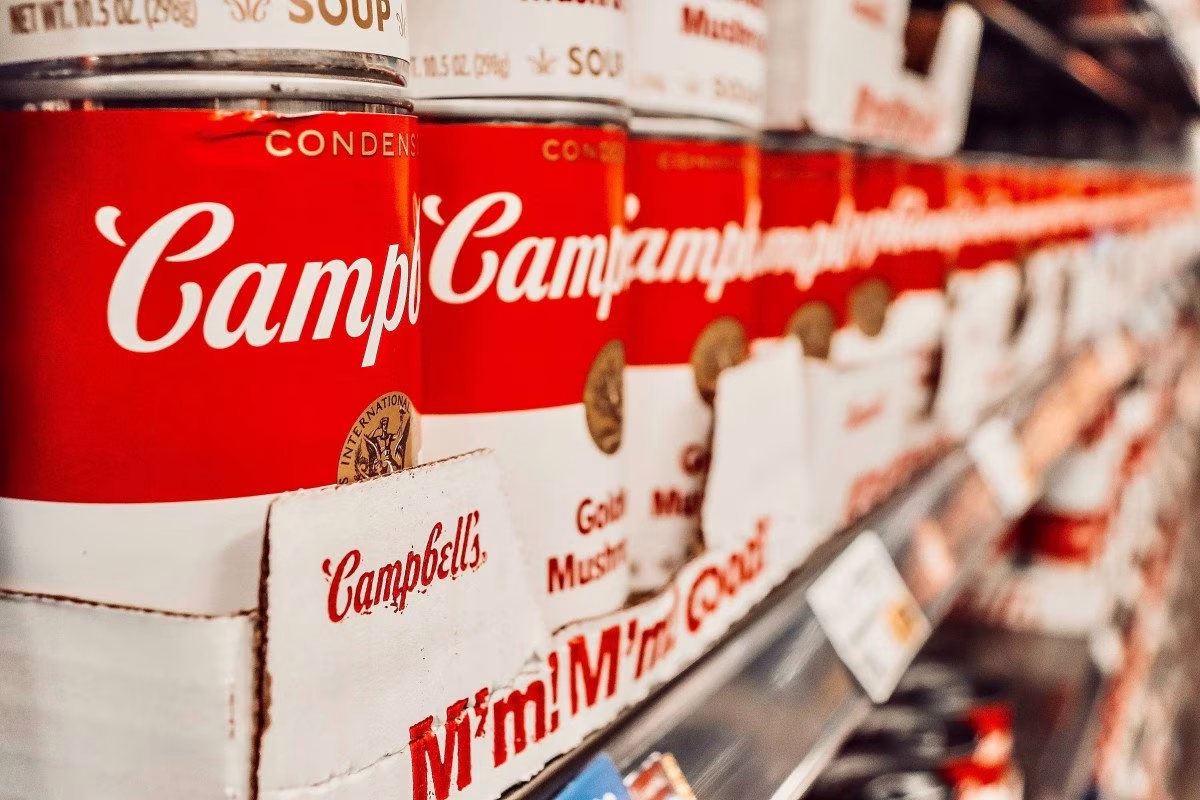
Campbell Soup Company, a revered institution in the food industry, has recently reported continued struggles in its snack segment, revealing a troubling trend for the iconic brand. As consumer preferences shift and demand wanes, the company is grappling with a dual challenge: revitalising its snack offerings while navigating broader market complexities. The latest quarter has shown a 4% decrease in sales, a reflection of the ongoing challenges in the snack market, notably for salty products such as chips and pretzels, which have experienced persistent softness in consumer demand.
Mick Beekhuizen, Campbell’s Chief Executive, addressed analysts during a recent earnings call, stating, “I recognise that our performance remains well below expectations.” It is a candid admission that underscores the difficulties the company faces as it attempts to redefine its place in an increasingly competitive landscape. Despite the setbacks, Beekhuizen remarked that there are encouraging signs of progress in various initiatives aimed at boosting the performance of the snack division. Perhaps most notably, some metrics for the beloved Goldfish brand have shown improvement, particularly following a strategic pivot towards marketing targeted at families with children. Collaborations with popular franchises, such as Pokémon, have been employed to refresh Goldfish’s appeal to a younger audience, reflecting an understanding that connection with consumers at the familial level may be integral to revitalising the brand.
As Campbell’s confronts the challenge of weak demand, it is also actively undertaking efforts to streamline operations and enhance its in-store execution. This includes rationalising its product portfolio and investing selectively in its various brands, endeavours that are not without their complexities. The past quarter’s results have underscored the urgent need for a clearer focus on profitability and market share as the company contemplates what is often a fraught relationship with consumer tastes.
While the snack category struggled, Campbell’s meals and beverages segment also felt the pinch, registering a similar 4% drop in net sales. Even within this segment, lower demand for soup—a staple product—was evident. However, Beekhuizen noted that some of the company’s flagship brands, including Campbell’s, Rao’s, and Swanson, continue to thrive as the trend towards home cooking persists. The pandemic has shifted a significant portion of consumer behaviour towards preparation of meals at home, as individuals seek greater control over their dietary choices. This trend is likely to have lasting effects in a world where affordability, comfort, and the personalisation of meals are increasingly valued.
Digital advancements have played a critical role in shaping this movement. The rise of online grocery shopping and the utility of social media platforms in facilitating meal preparation have made cooking at home not only a necessity but a convenient and enjoyable experience for many. This transformation in consumer habits posits a dual-edged sword for a company like Campbell’s, which must balance its heritage brands with the emerging need for everyday culinary solutions.
At the fiscal quarter’s conclusion, Campbell reported a profit of $124 million, or 41 cents per share. This is a notable increase from $66 million, or 22 cents per share, a year prior. Analysts had anticipated adjusted earnings of 48 cents a share, indicating positive financial adjustments despite declining sales—an outcome that suggests efficient cost management amidst plummeting revenues.
Looking ahead, Campbell’s has adjusted its fiscal year projections, now forecasting an organic net sales decline ranging between 1% to 2%. The adjusted earnings per share are anticipated to fall between $2.15 and $2.25, a modest outlook that aligns with the expectations set by analysts, who have predicted earnings of approximately $2.17 a share. This tempered forecast follows a recalibration of the company’s earlier expectations, which were scaled back in March due to increasingly sluggish snack sales—an alarming trend for a company deeply enshrined within the American culinary and cultural landscape.
Beekhuizen remains committed to instilling a sense of renewed optimism within the company’s ranks. He has underscored the importance of enhancing promotional initiatives and considering price adjustments aimed at regaining competitive footing. In a modern marketplace rife with distractions and increasing competition, strategies such as product innovation and reinstating customer engagement initiatives are vital for long-term sustainability. Simplifying the product range and ensuring that the right products are offered at appropriate price points will be essential as Campbell’s seeks to re-establish its hold on the ever-elusive snack market.
The company’s stock performance has mirrored its operational challenges, with shares experiencing a year-to-date decline of some 23%. On a recent trading day, shares ticked down by approximately 1%, settling at $21.51, signalling a cautious market sentiment amidst the backdrop of the company’s ongoing struggles. Investors will be keeping a close watch on the company’s forthcoming strategies, particularly as they attempt to navigate the new realities of consumer behaviour shaped by the pandemic and economic pressures.
Industry analysts and market watchers are acutely aware that the implications of Campbell’s current trajectory extend beyond mere financial performance. The company is at a pivotal junction, tasked with preserving its legacy while simultaneously reinvigorating its brand portfolio to resonate with a more health-conscious and digitally-savvy consumer base. It is a precarious balancing act, one that requires not only an understanding of market dynamics but also a willingness to embrace change within a venerable institution.
As Campbell’s endeavours to overcome these challenges, its journey will undoubtedly serve as a case study for other food manufacturers confronting similar market pressures. In the face of rising competition and shifting consumer preferences, the path forward will demand both innovation and adaptability. The stakes have never been higher for Campbell’s, a brand synonymous with comfort and routine in many American households, as it seeks to reclaim its excellence in the snack space while fostering a renewed connection with its consumer base.
Post Disclaimer
The following content has been published by Stockmark.IT. All information utilised in the creation of this communication has been gathered from publicly available sources that we consider reliable. Nevertheless, we cannot guarantee the accuracy or completeness of this communication.
This communication is intended solely for informational purposes and should not be construed as an offer, recommendation, solicitation, inducement, or invitation by or on behalf of the Company or any affiliates to engage in any investment activities. The opinions and views expressed by the authors are their own and do not necessarily reflect those of the Company, its affiliates, or any other third party.
The services and products mentioned in this communication may not be suitable for all recipients, by continuing to read this website and its content you agree to the terms of this disclaimer.
Related Posts


Previous Post
Next Post

