
Now Reading: Why Airlines Are Not Panicking Over UK’s Jet Fuel Supplies Yet
-
01
Why Airlines Are Not Panicking Over UK’s Jet Fuel Supplies Yet
Why Airlines Are Not Panicking Over UK’s Jet Fuel Supplies Yet

The uncertainty surrounding jet fuel supplies in the UK has emerged as a pressing concern among airline executives, but many are not exhibiting panic. Even in stable conditions, fuel suppliers provide limited long-term visibility, making it challenging for airlines to plan beyond a few weeks. Corneel Koster, the chief executive of Virgin Atlantic, explained that full visibility on fuel supplies is often achievable only for the upcoming month, with reasonable predictions extending to the subsequent month. Even as summer approaches, Koster expressed no immediate concerns regarding fuel availability for the near future.
Recent reports from the International Energy Agency raised alarms about potential jet fuel shortages in Europe, particularly due to geopolitical tensions related to the Iran conflict. Approximately 75 per cent of Europe’s jet fuel imports originate from the Middle East, rendering the sector extremely vulnerable to disruptions in this region. The temporary reopening of the Strait of Hormuz following a ceasefire was met with cautious optimism; however, recent developments suggest that supply disruptions are likely until a more stable diplomatic resolution is reached. With many supply chains adjusting to avoid this strait, uncertainties are increasing.
As the largest consumer of jet fuel in Europe, the UK faces acute exposure to the ongoing crisis. Domestic production accounts for only 30 per cent of the UK’s jet fuel; the remainder is primarily imported from Kuwait and other Middle Eastern nations. The dependence on the Strait of Hormuz for over 60 per cent of imports is particularly concerning. Recently, Norse Airways operational out of Gatwick cancelled their flights to Los Angeles, attributing the decision to soaring market prices rather than fuel shortages. Unlike most competitors, Norse had not hedged its fuel purchases, rendering the route economically unviable.
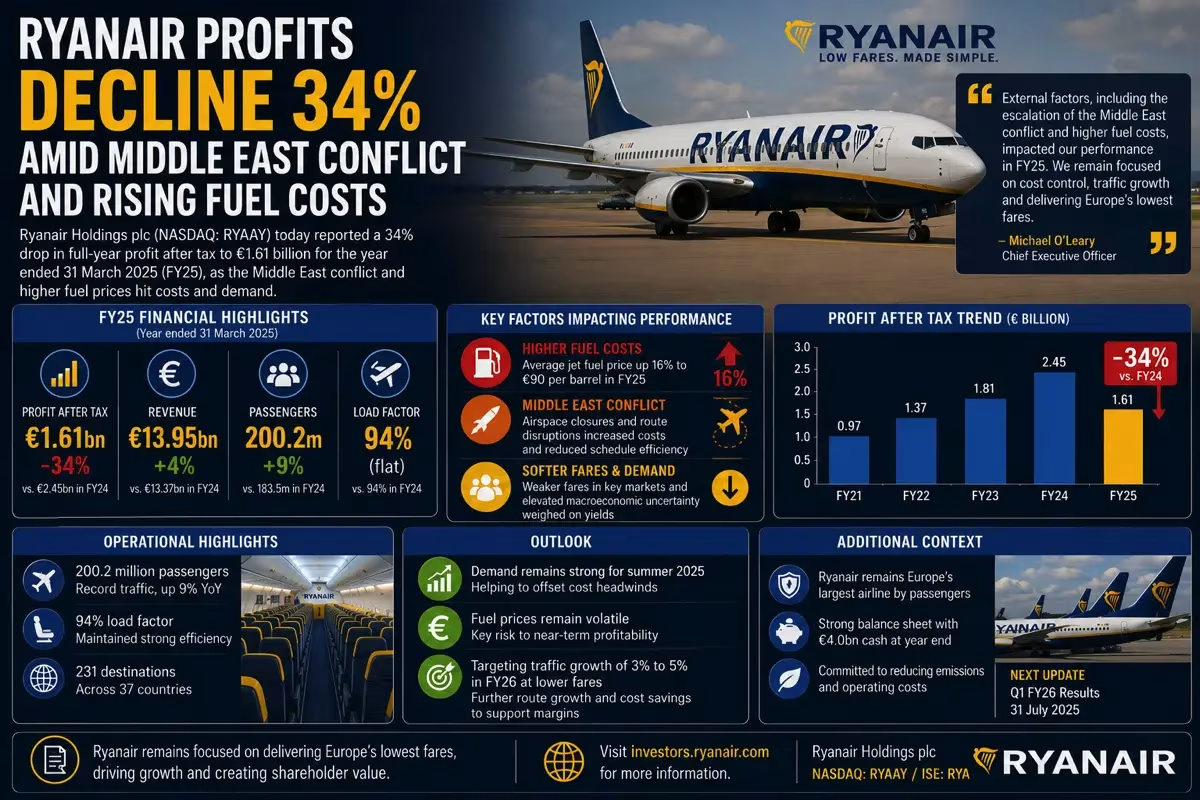
Lufthansa, the German flag carrier, announced significant cuts to its operations, which includes the grounding of aircraft due to rising fuel costs, affecting around 4,000 jobs. The airline’s finance chief stated that these measures were precipitated both by the geopolitical climate and ongoing strategic assessments of their operations.
Fuel costs are becoming unsustainable for several airlines, with easyJet reporting a £25 million increase in operational costs due to unhedged fuel bought in March. Others are opting to transfer these costs onto passengers, with Virgin Atlantic introducing a £50 fuel surcharge for economy class and £360 for business class.
The UK government has categorised jet fuel alongside fertilisers and industrial-grade carbon dioxide as areas at significant risk from trade disruptions linked to the ongoing Iranian conflict. However, officials appear less troubled about petrol supplies as the UK is a net exporter, ensuring adequate domestic production. The situation with diesel is worrisome, given the country’s reliance on imports, though the Middle East comprises only a small percentage of diesel sources.
Airlines and government officials remain optimistic regarding potential long-term solutions to fill the gaps created by these geopolitical tensions. Current reports indicate increasing shipments of jet fuel from the United States, providing a temporary alternative to traditional Middle Eastern sources.
Despite scattered reports of limited jet fuel reserves at some UK airports, including Heathrow, the existing pipeline network facilitates quick repositioning of fuel from various terminals and refineries. This pipeline system is tightly controlled and not publicly disclosed due to its strategic significance. There has been no establishment of an emergency task force by the UK government, although industry communications continue through regular reporting and voluntary submissions from airlines regarding their fuel needs.
As the industry adapts to current challenges, the economic climate’s impact on travel demand will play a significant role in shaping future operations. Expectations for air travel demand have been recalibrated downward, aligning with current fuel price levels.
Post Disclaimer
The following content has been published by Stockmark.IT. All information utilised in the creation of this communication has been gathered from publicly available sources that we consider reliable. Nevertheless, we cannot guarantee the accuracy or completeness of this communication.
This communication is intended solely for informational purposes and should not be construed as an offer, recommendation, solicitation, inducement, or invitation by or on behalf of the Company or any affiliates to engage in any investment activities. The opinions and views expressed by the authors are their own and do not necessarily reflect those of the Company, its affiliates, or any other third party.
The services and products mentioned in this communication may not be suitable for all recipients, by continuing to read this website and its content you agree to the terms of this disclaimer.
Related Posts

Previous Post
Next Post

