Now Reading: Berkeley Group’s Development Plans in Peckham Halted by Heritage Concerns
-
01
Berkeley Group’s Development Plans in Peckham Halted by Heritage Concerns
Berkeley Group’s Development Plans in Peckham Halted by Heritage Concerns
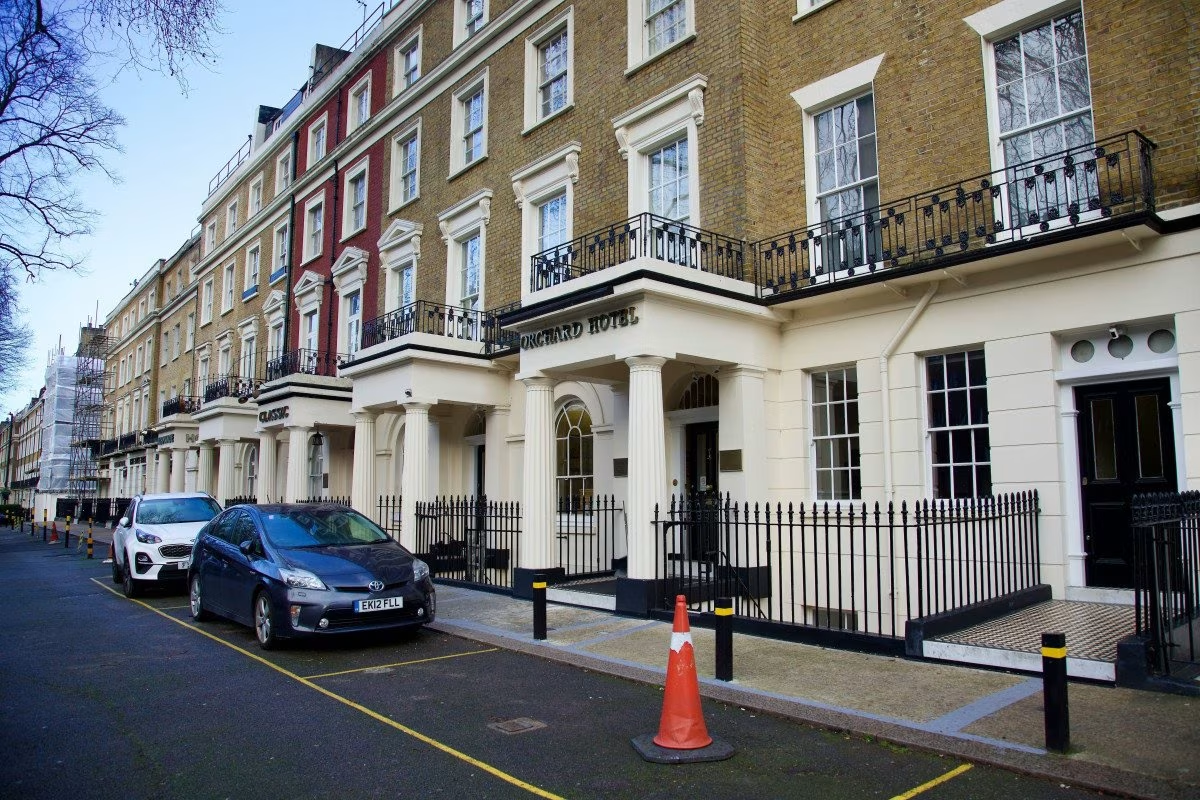
The Berkeley Group, one of London’s leading housebuilders, has expressed profound frustration following the rejection of its proposal to replace the Aylesham Centre in Peckham with nearly 900 new homes. This decision, driven by concerns over the potential impact on local heritage assets, has raised alarms within the developer community, igniting discussions about the viability of future projects in the capital amidst a deepening housing crisis.
The planned redevelopment, which included 790 open-market and 77 affordable flats, was deemed essential for rejuvenating a site seen as pivotal for boosting social and economic welfare in the area. The planning inspector, however, upheld the view that the benefits of new housing infrastructure do not outweigh the potential harm posed to historically significant nearby assets, including a listed clock tower and a former HSBC bank. The inspector’s report reflected a broader concern for preserving the character of Peckham despite the acute housing shortage that London faces.
Rob Perrins, executive chair at Berkeley, has voiced his disdain for the apparent double standards within planning decisions that allow development near recognised heritage sites like Tower Bridge while blocking progress in Peckham. The thinning patience of developers like Berkeley is evident in their assertion that continued refusals to invest in London could jeopardise the city’s housing objectives. Perrins underscored the irony of navigating stringent regulatory frameworks that seem at odds with urgently required housing initiatives, particularly in a city grappling with declining build rates.
Amidst rising construction costs, which have increased by nearly 50 per cent since 2018 while house prices have risen by just 12 per cent, the viability of housing projects stands precariously at risk. The rejection of the Aylesham proposal—initially identified for potential housing growth years ago—signals a troubling trend for the capital, which is experiencing its lowest rate of housebuilding since the Second World War. Data indicates that to meet the pressing demand, work needs to commence on approximately 22,000 new homes every quarter in London. Yet, the latest figures suggest that only a fraction of this target has been achieved in the early months of 2026.
Sarah King, the leader of Southwark Council, celebrated the decision as a victory for local residents who had expressed concerns over the development’s design and its alignment with the area’s character. The objections from both local authorities and community campaign groups have highlighted the increasing influence of ‘nimbyism’—a phenomenon where local populations resist new developments in their neighbourhoods despite broader housing needs. This growing opposition raises questions about how balance is maintained between housing delivery and preserving local heritage.
Berkeley Group’s plans for the Aylesham Centre were first mooted in public discussions dating back to 2017, with the formal submission of the planning application occurring in July 2024. The timing of this proposal follows the increasing urgency within government circles to address standalone housing shortages, an initiative that seems increasingly at odds with local project rejections. The back-and-forth between local councils and developers has compounded an environment of uncertainty that stifles investment.
The planning inspector acknowledged the chief merits of the proposal, which aimed to redevelop a site recognised as underutilised and situated in a highly sustainable urban centre. Yet, the heritage implications of the development overshadowed its potential advancements towards alleviating the housing crisis. By rejecting this proposal, a missed opportunity to integrate new housing into the fabric of Peckham was signalled, indicating a broader reluctance to sacrifice historical richness for modern necessity.
Despite these setbacks, Perrins has indicated that the Berkeley Group will explore all available avenues, potentially even appealing to higher courts, to revive plans for the Aylesham site. The argument from developers continues to rest on the assertion that failing to permit substantial housing on brownfield sites ultimately leads to a reliance on the green belt—an unsustainable solution that jeopardises agricultural land and dilutes the character of suburban areas.
Berkeley’s ambitions for building on brownfield sites reflect not only the company’s desire to meet housing demands but also the difficulty developers face in reconciling economic imperatives with local aspirations. The challenge remains: how can development be undertaken responsibly while also facilitating the urgent need for housing, especially in sensitive urban areas? Each planning rejection sends ripples of concern across the industry, stymying growth and exacerbating the plight of those in need of affordable housing.
With the housing crisis deepening, a more harmonious approach between local authorities and developers appears essential, one that allows for innovative solutions that respect heritage while prioritising the pressing demands of a rapidly growing population. The case of the Aylesham Centre is emblematic of broader tensions between historic preservation and the immediate need for housing provision, and these discussions must evolve in tandem with the collective desires of urban dwellers.
As discussions continue within local councils, community groups, and developers, the need for creative dialogue aimed at addressing both heritage concerns and housing shortages becomes more pertinent. The contrasting views on what constitutes responsible development highlight the complexities that underlie urban planning in a country where heritage and modernity must coexist. Without significant shifts in how projects are approved, London risks not just losing housing potential but also the vibrancy that new developments contribute to the urban landscape.
The Aylesham Centre may be just one site in Peckham, but its story is a reflection of an ongoing struggle faced throughout London. With critical insights into how to balance development and heritage still obscured, the city stands at a crossroads, confronting choices that will shape its future. The urgency of these decisions grows with each passing day, and the road ahead must be navigated with both vision and compromise.
Post Disclaimer
The following content has been published by Stockmark.IT. All information utilised in the creation of this communication has been gathered from publicly available sources that we consider reliable. Nevertheless, we cannot guarantee the accuracy or completeness of this communication.
This communication is intended solely for informational purposes and should not be construed as an offer, recommendation, solicitation, inducement, or invitation by or on behalf of the Company or any affiliates to engage in any investment activities. The opinions and views expressed by the authors are their own and do not necessarily reflect those of the Company, its affiliates, or any other third party.
The services and products mentioned in this communication may not be suitable for all recipients, by continuing to read this website and its content you agree to the terms of this disclaimer.
Related Posts


Previous Post
Next Post