
Now Reading: Bitcoin Faces Unprecedented Weekly Decline amid Market Turmoil
-
01
Bitcoin Faces Unprecedented Weekly Decline amid Market Turmoil
Bitcoin Faces Unprecedented Weekly Decline amid Market Turmoil
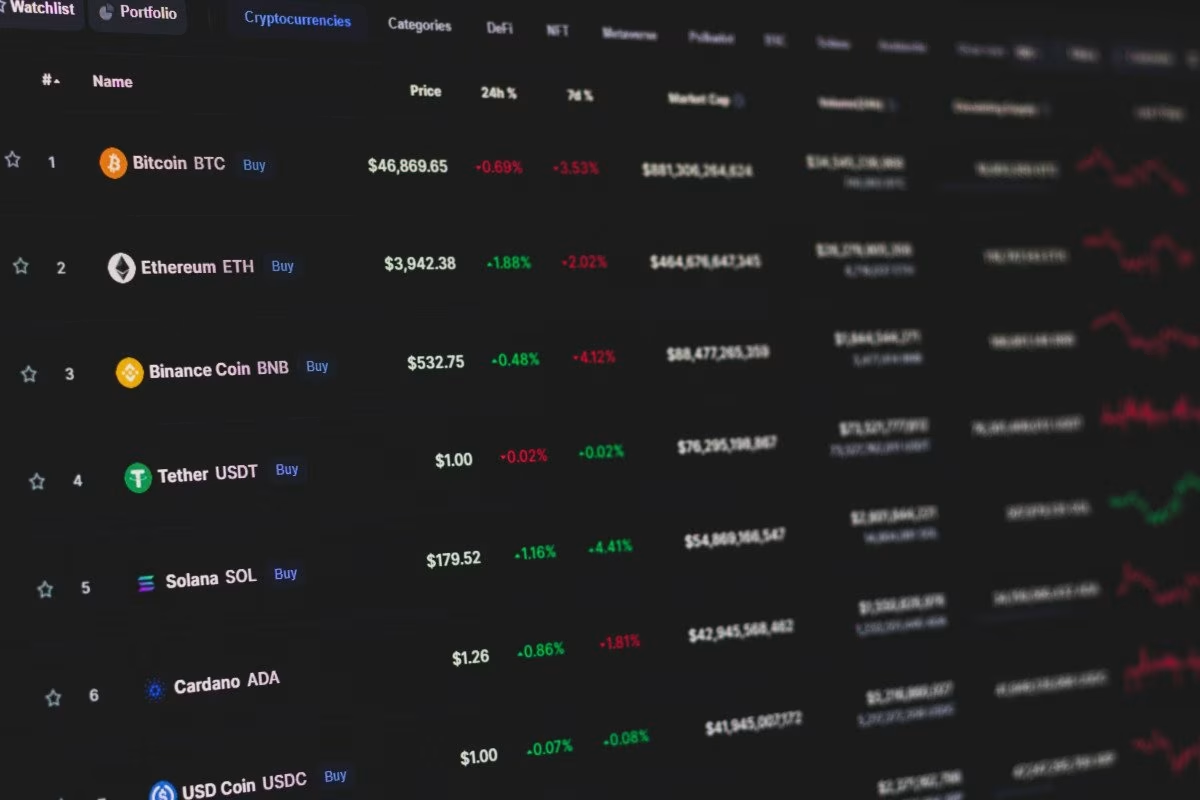
In an unsettling development for cryptocurrency enthusiasts, Bitcoin has experienced its most significant weekly drop since the tumultuous collapse of the FTX exchange in late 2022. The world’s leading digital asset has plummeted by nearly 20%, trading below the psychologically critical threshold of $61,000. This marks its lowest level since September 2024, raising alarms among investors and market analysts alike.
This recent downturn has heightened concerns within the cryptocurrency community, particularly as Bitcoin’s value has effectively halved from the astonishing all-time high of over $126,000 reached in October of last year. What makes this decline even more troubling is the sentiment it evokes, reminiscent of past crises within the crypto sector. The catastrophic fallout from the FTX scandal still looms large in the collective memory of investors, and many are now questioning whether the current market dynamics are merely a prelude to a more profound crisis.
Central to this latest upheaval was the decision by Strategy, reputedly the largest Bitcoin treasury business, led by prominent figure Michael Saylor, to reduce its holdings. The company disclosed an offloading of approximately $2.5 million in crypto assets amid resignations from previous commitments to a steadfast holding strategy. Saylor had previously vowed that his company would not become sellers, asserting emphatically in 2022, “Never. No. We’re not sellers. We’re only acquiring and holding.” This perceived breach of trust has triggered widespread unease, not only about Strategy’s intentions but about the overall stability of Bitcoin and the cryptocurrency market.
The market’s reaction has been swift and severe. Traders are spooked, reflecting a broader trend of anxiety that appears to be infecting the sector. Many observers contend that the recent disclosures have catalysed this downturn, exacerbating a scenario already fraught with uncertainty. Numerous market-watchers have pointed out that such volatility may lead crypto holders to reassess their positions, sparking a wave of selling that further compounds the problem.
However, the factors driving this decline may be more complex than they initially appear. The impending SpaceX initial public offering (IPO) is widely cited as a contributing element. Elon Musk’s aerospace conglomerate is reportedly aiming to raise an eye-watering $86 billion, valuing the company at nearly $1.8 trillion. This monumental financial manoeuvre effectively redirects investor attention and capital away from the cryptocurrency market, particularly as retail investors look for opportunities in this high-profile IPO. In this light, many are asking whether Bitcoin is falling victim to the whims of the broader market landscape, one where momentum shifts rapidly and unpredictably.
Mark Dowding, Chief Investment Officer for Fixed Income at RBC BlueBay Asset Management, observed that the current correction in Bitcoin can be viewed as symptomatic of an overall disinterest among investors, driven by lacklustre returns in recent months. As interest wanes, traders are increasingly inclined to seek more appealing avenues for investment, thus adding to the downward pressure on Bitcoin’s price. The transition from an asset that once dominated headlines as the “flavour of the month” to one that is suddenly out of favour raises legitimate questions about the sustainability of cryptocurrencies as a long-term investment.
Further complicating the scenario is the shifting sentiment among institutional investors, who have played an essential role in Bitcoin’s ascent over the past few years. Their cautious behaviour reflects a growing hesitancy, particularly in light of the heightened regulatory scrutiny and scrutiny from traditional financial institutions. The interplay between cryptocurrency markets and traditional asset classes complicates the picture even further. Analysts are observing increasing correlations between Bitcoin and stocks, raising concerns over its long-term value proposition as a “store of value” or “digital gold.”
As Bitcoin’s once-lofty aspirations seem to hang in the balance, the discussion shifts from speculation about its future price to deeper questions about the nature of faith in digital currencies. Are they merely speculative assets, or do they hold intrinsic value that could weather such storms? For many investors, each price fluctuation may feel like a referendum on the cryptocurrency’s viability, compelling them to reconsider their allegiances and investment strategies.
The human element also cannot be overlooked in this volatile environment. The emotional toll on market participants — newly minted investors, seasoned traders, and institutional backers alike — is palpable. The distinct psychology of fear and greed that characterises these markets has been vividly illuminated by the recent events. Those who once hailed Bitcoin as a revolutionary force now grapple with uncertainty, contemplating the wisdom of their investment decisions in light of tumultuous price swings.
Furthermore, the discourse surrounding Bitcoin increasingly includes discussions of its environmental impact and regulatory concerns. As governments worldwide intensify their scrutiny of cryptocurrency operations, conversations about sustainability are becoming intertwined with the financial metrics that banks and traditional investors typically evaluate. The relationship between Bitcoin mining, energy consumption, and its subsequent impact on global climate goals adds an additional layer of complexity to an already intricate landscape, prompting many to reconsider whether Bitcoin is a worthy investment in a broader, ethical financial portfolio.
In these turbulent times, investing in cryptocurrencies calls for a nuanced understanding of the underlying global economic conditions, as well as a keen awareness of potential external shocks. The intertwining of traditional markets with cryptocurrencies has made it increasingly clear that these digital assets cannot be evaluated in isolation. The myriad influences upon their value must be considered holistically, from investor psychology to market sentiment, and from regulatory shifts to corporate announcements.
As we observe the ongoing market fluctuations, it is crucial to approach discussions of Bitcoin and other cryptocurrencies with both caution and clarity. The digital asset landscape has undeniably shifted, rendering it imperative for investors and analysts alike to remain vigilant and adaptable in order to navigate this increasingly volatile environment. What remains to be seen is whether Bitcoin can emerge from this turmoil stronger and more resilient, or whether it risks becoming a mere footnote in financial history, overshadowed by more stable and compliant alternatives.
Post Disclaimer
The following content has been published by Stockmark.IT. All information utilised in the creation of this communication has been gathered from publicly available sources that we consider reliable. Nevertheless, we cannot guarantee the accuracy or completeness of this communication.
This communication is intended solely for informational purposes and should not be construed as an offer, recommendation, solicitation, inducement, or invitation by or on behalf of the Company or any affiliates to engage in any investment activities. The opinions and views expressed by the authors are their own and do not necessarily reflect those of the Company, its affiliates, or any other third party.
The services and products mentioned in this communication may not be suitable for all recipients, by continuing to read this website and its content you agree to the terms of this disclaimer.
Related Posts


Previous Post
Next Post

