Now Reading: China Seeks Long Term LNG Deals Beyond the Strait of Hormuz
-
01
China Seeks Long Term LNG Deals Beyond the Strait of Hormuz
China Seeks Long Term LNG Deals Beyond the Strait of Hormuz
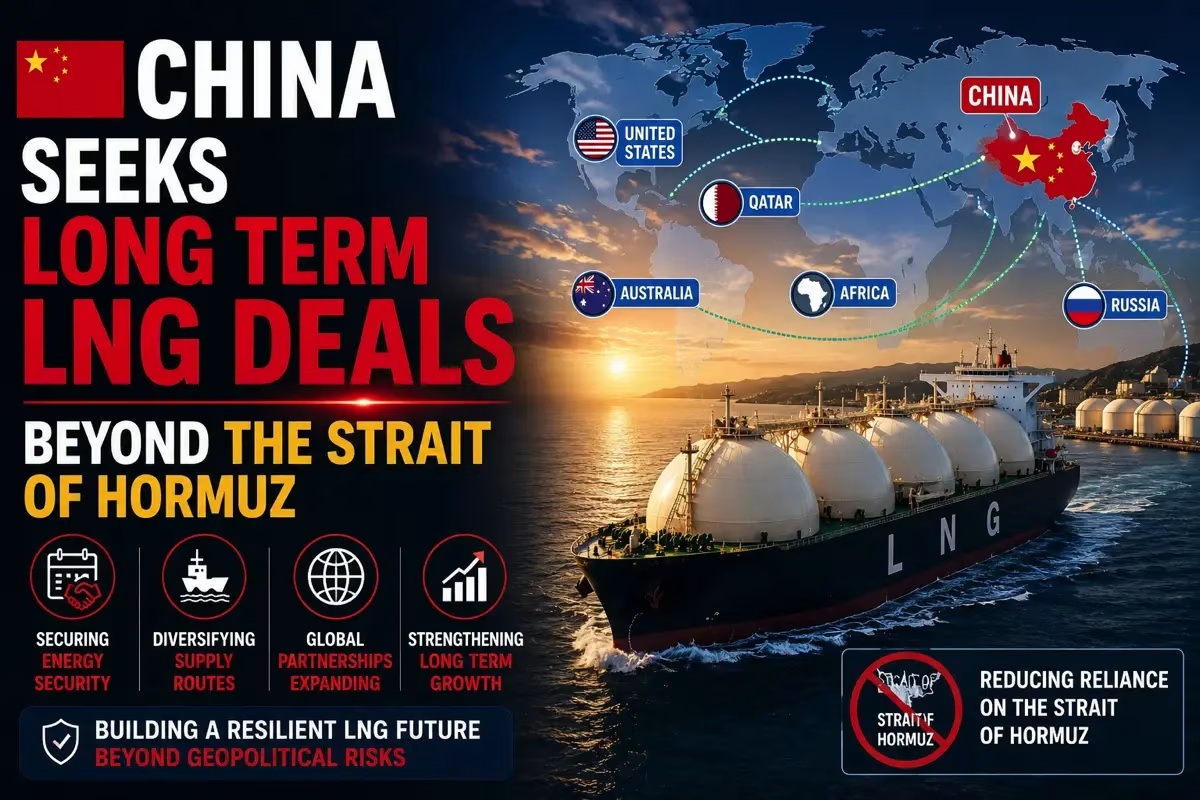
China’s state-controlled liquefied natural gas importers have entered negotiations to secure long-term supply contracts with exporters whose shipping routes circumvent the Strait of Hormuz, according to sources familiar with the discussions. The strategic shift reflects the world’s largest LNG buyer’s determination to reduce exposure to Persian Gulf deliveries amid escalating regional instability.
Qatar currently stands as China’s primary LNG supplier, having provided nearly 30 per cent of Chinese LNG imports during the previous calendar year. However, the eruption of Middle Eastern hostilities, which resulted in the closure of the Strait of Hormuz and damage to Qatari infrastructure, has severely disrupted this supply relationship.
Ship-tracking data compiled by Bloomberg reveals the dramatic contraction in Qatari LNG deliveries to China. Second-quarter imports registered approximately 100,000 tonnes, compared with 4.7 million tonnes during the corresponding period in the previous year. This represents a collapse of more than 97 per cent in volume terms.
Several Chinese state-controlled energy majors have executed long-term agreements with Qatar in recent years, acquiring minority equity positions in the Gulf producer’s expansion projects as part of these arrangements. The ongoing conflict has forced delays to portions of this expansion programme.
Sources indicate that Beijing does not intend to cancel existing binding contracts with Qatar. Instead, Chinese authorities are evaluating options to diminish dependence on Gulf-sourced supplies. Major Chinese LNG buyers, including PetroChina and Sinopec, have initiated discussions with alternative exporters regarding potential deliveries commencing before 2030, with contract durations of at least ten years.
Canada has emerged as one potential supply source, according to individuals familiar with the negotiations. Canadian authorities have expressed ambitions to enhance energy exports to Asian markets, seeking to establish the country as an energy superpower whilst diversifying export destinations beyond excessive reliance on the United States.
China’s sourcing strategy faces a significant complication. Whilst seeking alternatives to Hormuz-dependent supplies, Chinese buyers would likely prefer to avoid substantial dependence on US LNG volumes. This preference stems from ongoing trade policy uncertainties and tariff considerations under the current US administration, which have created unpredictability in bilateral commercial relations.
The reconfiguration of China’s LNG procurement strategy carries substantial implications for global gas markets. As the world’s largest importer, any material shift in Chinese sourcing patterns will influence price dynamics, contract structures and investment decisions across multiple exporting jurisdictions. The situation underscores the intersection of energy security considerations and geopolitical risk management in contemporary commodity markets.
Post Disclaimer
The following content has been published by Stockmark.IT. All information utilised in the creation of this communication has been gathered from publicly available sources that we consider reliable. Nevertheless, we cannot guarantee the accuracy or completeness of this communication.
This communication is intended solely for informational purposes and should not be construed as an offer, recommendation, solicitation, inducement, or invitation by or on behalf of the Company or any affiliates to engage in any investment activities. The opinions and views expressed by the authors are their own and do not necessarily reflect those of the Company, its affiliates, or any other third party.
The services and products mentioned in this communication may not be suitable for all recipients, by continuing to read this website and its content you agree to the terms of this disclaimer.
Related Posts


Previous Post
Next Post