
Now Reading: FirstGroup Struggles Amid Nationalisation: Rail Operations Face Challenges While Profits Shift
-
01
FirstGroup Struggles Amid Nationalisation: Rail Operations Face Challenges While Profits Shift
FirstGroup Struggles Amid Nationalisation: Rail Operations Face Challenges While Profits Shift
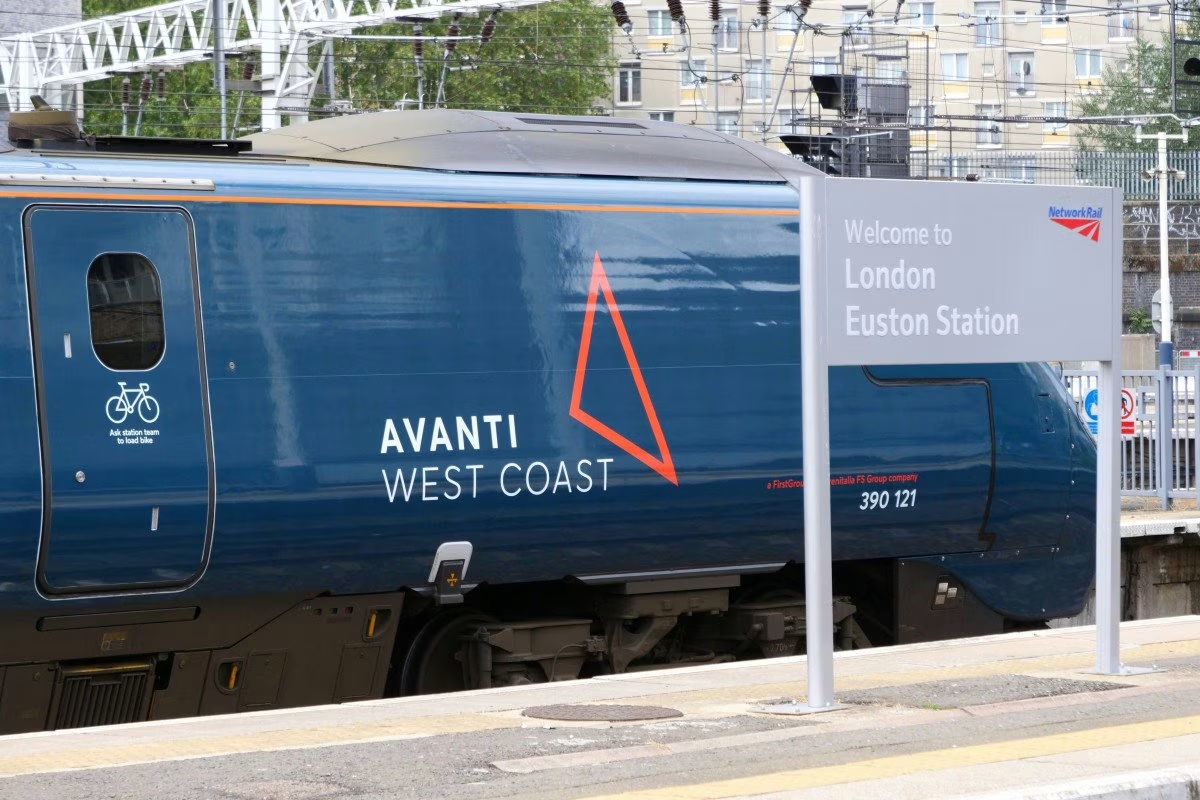
The shifting landscape of Britain’s railway operations has become more pronounced in recent months, particularly for FirstGroup, a significant player in the sector. Facing the realities of Labour’s decision to renationalise vital railway services, the company has reported a mixed financial performance amidst a backdrop of increasing competition, rising operational costs, and altered consumer behaviours. Despite this, its shares experienced a notable increase following a positive earnings report that exceeded analysts’ expectations.
In recent disclosures, FirstGroup revealed adjusted revenue of £1.72 billion, marking a substantial increase of 25 per cent from the previous year. However, adjusted group pre-tax profits declined slightly, from £158.8 million to £156.7 million. This duality in performance underscores the complexities that FirstGroup faces as it navigates an increasingly challenging operating environment, particularly in light of creeping inflation and a fluctuating consumer base, which has seen leisure travellers postponing weekend trips and utilising services less frequently.
At the forefront of FirstGroup’s challenges is the impending transfer of Avanti West Coast services to state control. This action, set to occur in the spring, solidifies a trend wherein the government has gradually reclaimed oversight of key railway operations. The loss of Avanti, which is regarded as the busiest long-haul service in the UK, casts a long shadow over FirstGroup’s financial outlook, sparking concerns about the sustainability of its business model. The nationalisation of South Western Railway and the projected handover of Great Western Railway are further indicators of the state’s re-assertion of control over rail transport.
Amidst these shifts, FirstGroup has attempted to adapt by exploring “open access” operations—niche services aimed at underserved locations or popular routes. However, the efficacy of this strategy has been hindered by a surge in price competition, chiefly between state-run services and private operators on the East Coast main line. The situation has intensified with the state-owned London North Eastern Railway (LNER) increasing its services, resulting in a price war that has further pressured FirstGroup’s operating margins.
Compounding these difficulties, FirstGroup has faced surging operational costs, particularly in track access payments to Network Rail, which have risen significantly. On this front, the company reported an additional £2 million in charges related to track access alongside the £6.3 million required to initiate a new open access operation between London Euston and Stirling. This combination of factors has led to a staggering 23 per cent drop in profits generated from open access operations, with figures plummeting to £28.9 million for the twelve months leading to March.
Such declines in profitability from open access ventures could prove detrimental as FirstGroup is projected to lose approximately £62 million in profits derived from low-margin contracts involving Great Western Railway and Avanti by the 2027-28 financial year. These events have prompted the company to realign its focus towards road transport, necessitating a strategic pivot back to buses. The competitive landscape for road transport is evolving, with FirstGroup re-entering the London bus market and expanding its partnership with FlixBus. This move signifies an attempt to diversify revenue streams amidst uncertainty in the rail sector.
The focus on road transport comes at a time when FirstGroup’s core regional bus operations have been under considerable strain. Several factors have contributed to declining passenger numbers, not least the increase in state-funded ticket prices and a noticeable shift in consumer habits as fewer individuals opt to travel into urban centres for shopping or leisure activities. Nevertheless, the company has reported a 25 per cent increase in profits for its new west London bus operations, contributing £40 million to an overall total of £200 million. This segment demonstrates potential growth opportunities in a challenging transport landscape.
Excitingly, FirstGroup’s chief executive, Graham Sutherland, has voiced optimism regarding the transformation of its business structures. He observes that the company is on track to maintain group adjusted earnings per share throughout the 2026-27 fiscal year. This sentiment aligns with projections of approximately £400 million in free cash flow over the next three years, providing a semblance of reassurance to investors following a turbulent period. Furthermore, this optimistic outlook underpins a 10 per cent increase in dividends, which have risen to 7.2 pence per share, alongside a £100 million share buyback initiative intended to bolster investor confidence.
As FirstGroup adapts to the evolving dynamics of British transport, it remains to be seen how effective these strategies will be in the face of systemic shifts. The implications of nationalisation extend beyond simple operational adjustments; they raise fundamental questions about the viability of private operators in an increasingly state-dominated landscape. With nationalisation set to redefine the roles and responsibilities of transport providers, FirstGroup’s approach may serve as a bellwether for other companies grappling with similar challenges.
Despite the robust earnings report that temporarily buoyed stocks, FirstGroup’s future remains uncertain, intricately linked to broader governmental policies and market forces that continue to reshape the transport sector. Vigilance and innovation will be paramount as the company seeks to establish a foothold amid an ongoing transitional phase marked by competitiveness, regulatory changes, and the imperatives of changing consumer preferences.
Post Disclaimer
The following content has been published by Stockmark.IT. All information utilised in the creation of this communication has been gathered from publicly available sources that we consider reliable. Nevertheless, we cannot guarantee the accuracy or completeness of this communication.
This communication is intended solely for informational purposes and should not be construed as an offer, recommendation, solicitation, inducement, or invitation by or on behalf of the Company or any affiliates to engage in any investment activities. The opinions and views expressed by the authors are their own and do not necessarily reflect those of the Company, its affiliates, or any other third party.
The services and products mentioned in this communication may not be suitable for all recipients, by continuing to read this website and its content you agree to the terms of this disclaimer.
Related Posts


Previous Post
Next Post

