
Now Reading: Allwyn: Navigating Challenges and Embracing Transformation in the National Lottery Landscape
-
01
Allwyn: Navigating Challenges and Embracing Transformation in the National Lottery Landscape
Allwyn: Navigating Challenges and Embracing Transformation in the National Lottery Landscape
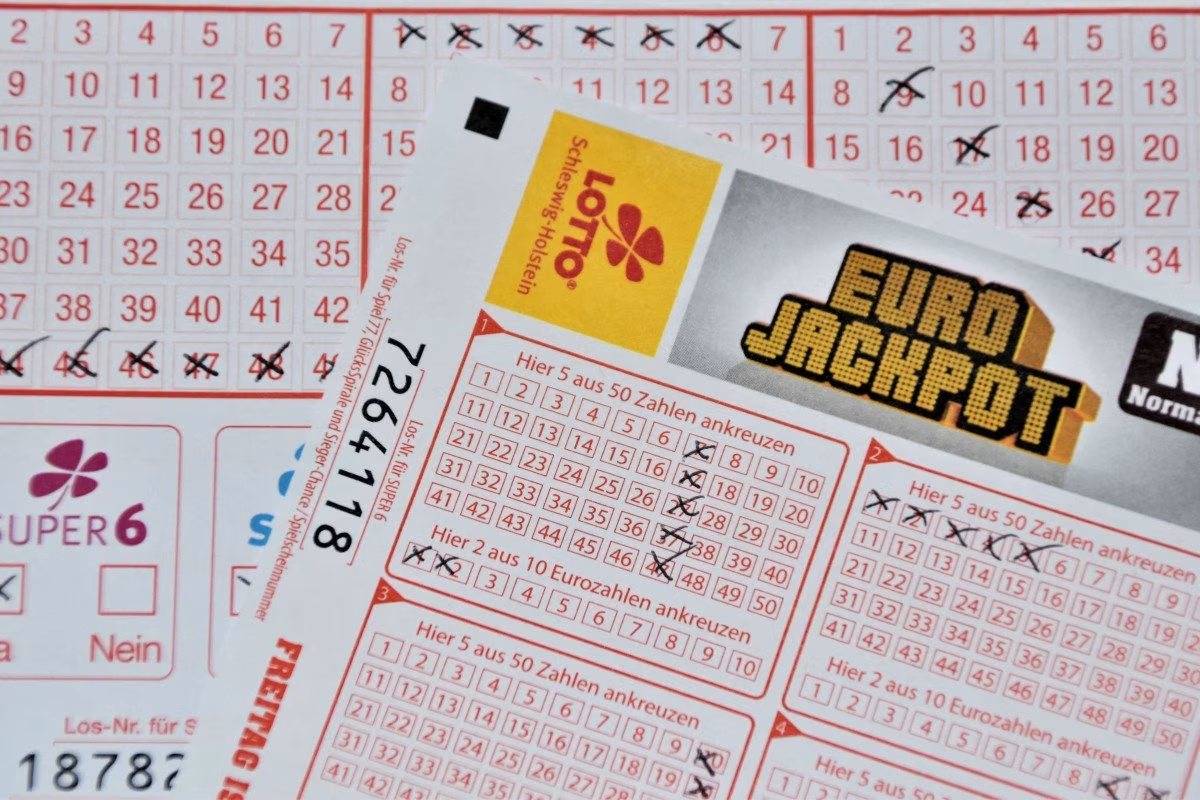
Allwyn, the company now at the helm of the UK’s National Lottery, finds itself at a critical juncture, grappling with mixed financial results while simultaneously poised for significant innovation following an extensive £450 million technology upgrade. The firm, which assumed control of the lottery licence from Camelot in 2024, reported a noteworthy decline in its UK gross gaming revenues for the first quarter of the year, illustrating the challenging environment in which it operates.
Specifically, Allwyn’s UK arm experienced a 7 per cent drop in gross gaming revenues, totalling €942 million over the first three months. This decrease is juxtaposed with the underlying earnings which fell dramatically, halving to €4 million compared to €9 million during the same period the previous year. Executives at Allwyn have suggested that the decline can largely be attributed to exceptionally high comparative figures from the previous year, a period that saw an unprecedented EuroMillions jackpot driving substantial demand.
Moreover, the substantial costs incurred from revamping its online gaming platform have weighed heavily on Allwyn’s financial performance. This revamp is no small undertaking as it encompasses the migration of 18 million player records and an astonishing three billion historical transactions from outdated systems to contemporary platforms. In addition to this, upgrades to their lottery website and mobile applications, along with the enhancement of over 40,000 terminals in retail locations, form the backbone of this transformation, aiming to modernise the lottery experience for players.
Despite these obstacles, Allwyn views this technological overhaul as a pivotal moment in its operational trajectory. The completion of the upgrades coincides with the launch of new commercial initiatives, moving the organisation from a phase of costly transformation to one poised for recovery. The new Lotto format is set to be unveiled shortly, allowing players increased chances of winning. This adaptation is projected to see the number of Lotto millionaires increase significantly—from 140 to approximately 345 annually—providing a compelling incentive for player engagement and investment in the game.
In parallel with the new Lotto game set to launch, Allwyn plans to introduce a UK-specific variant of the globally popular Powerball later this summer. With a ticket price set at £4 per line, the new Powerball aims to facilitate UK players’ participation in the world’s largest jackpot game, further broadening the appeal of the National Lottery. The intention behind these innovations is not only to attract more players but also to generate increased revenue for good causes, with Allwyn pledging to double the amount contributed to charitable initiatives each week to £60 million by 2034.
Allwyn’s executives are optimistic that these developments signify an essential turning point in the business’s financial framework. The recent upgrades are not merely attempts to adapt; they represent an ambitious strategy to integrate new technologies and modernise the player experience fundamentally. As they reshape their approach, the company is working to build a robust foundation for sustainable future growth, showcasing an important transition from merely maintaining their position to actively enhancing it.
Allwyn’s road has not always been smooth. The transition from a long-standing operator, Camelot, who held the National Lottery licence for nearly three decades, has been punctuated with legal disputes and challenges. The competition for the lottery licence was rife with contention, culminating in a series of legal battles initiated by Camelot, which sought to reclaim their position. However, these legal challenges were eventually dropped, paving the way for Allwyn to proceed with its restructuring and innovation plans, designed to ensure that the National Lottery remains a vital national institution.
This transformation is indicative not just of Allwyn’s aspirations but also of the broader evolution of the gaming and lottery industry at large, which is increasingly influenced by technological advancements and shifts in consumer behaviour. Allwyn’s merger with Opap, a well-regarded Greek company, signifies a burgeoning ambition on the international stage. Such strategic collaborations are indicative of a desire to become a prominent player in global gaming, expanding its market reach while enhancing operational efficiencies.
The integration of two major operators under the Allwyn brand is expected to bolster both financial strength and market presence. Following the merger, the organisation now boasts a combined valuation of approximately €16 billion and is considered the second-largest publicly traded gambling entity globally, surpassed only by Flutter, which is known for its ownership of brands like FanDuel and Paddy Power. This positioning not only amplifies Allwyn’s competitive edge but also attracts further investment and strategic partnerships.
Leadership at Allwyn is optimistic, viewing the current quarter as transformative. Robert Chvatal, the Chief Executive Officer, expressed pride in the direction the company is taking, highlighting the importance of the merger in creating a global leader in the gaming entertainment sector. With such optimism, the company aims to diversify its offerings while maintaining a strong commitment to the communities it serves through its philanthropic initiatives.
Yet, it remains to be seen how successfully Allwyn can navigate the complexities of a rapidly changing market landscape, especially given the strong legacy left by Camelot. The looming questions of consumer engagement and revenue growth will need to be addressed to avoid any further dips in performance, particularly following the fall in ticket sales reported as the new products and games faced delays due to prior legal complications.
As Allwyn prepares to unveil its new product offerings and expand its operational capabilities, it stands at the threshold of potential revitalisation and renewed engagement with players. However, the company will need to tread carefully, balancing innovation with the preservation of the core values that have historically defined the National Lottery. The delicate interplay of tradition and modernisation will be central to the organisation’s forthcoming strategies as it seeks to cement its role not only as a lottery operator but as a key contributor to the UK’s socio-economic fabric.
This transition encapsulates the potential for Allwyn to emerge not only as an operator of games of chance but also as a conduit for positive contributions to society at large. With strategic foresight, technological upgrades, and an eye toward social responsibility, Allwyn is ambitiously redefining its place in the lottery landscape, navigating the dual challenges of competition and innovation. Time will tell whether these efforts translate into enduring success, augmenting the legacy of the National Lottery into a new era of engagement and benevolence.
Post Disclaimer
The following content has been published by Stockmark.IT. All information utilised in the creation of this communication has been gathered from publicly available sources that we consider reliable. Nevertheless, we cannot guarantee the accuracy or completeness of this communication.
This communication is intended solely for informational purposes and should not be construed as an offer, recommendation, solicitation, inducement, or invitation by or on behalf of the Company or any affiliates to engage in any investment activities. The opinions and views expressed by the authors are their own and do not necessarily reflect those of the Company, its affiliates, or any other third party.
The services and products mentioned in this communication may not be suitable for all recipients, by continuing to read this website and its content you agree to the terms of this disclaimer.
Related Posts


Previous Post
Next Post

