Now Reading: Babcock’s Profits Erode Amid Type 31 Frigate Hurdles
-
01
Babcock’s Profits Erode Amid Type 31 Frigate Hurdles
Babcock’s Profits Erode Amid Type 31 Frigate Hurdles
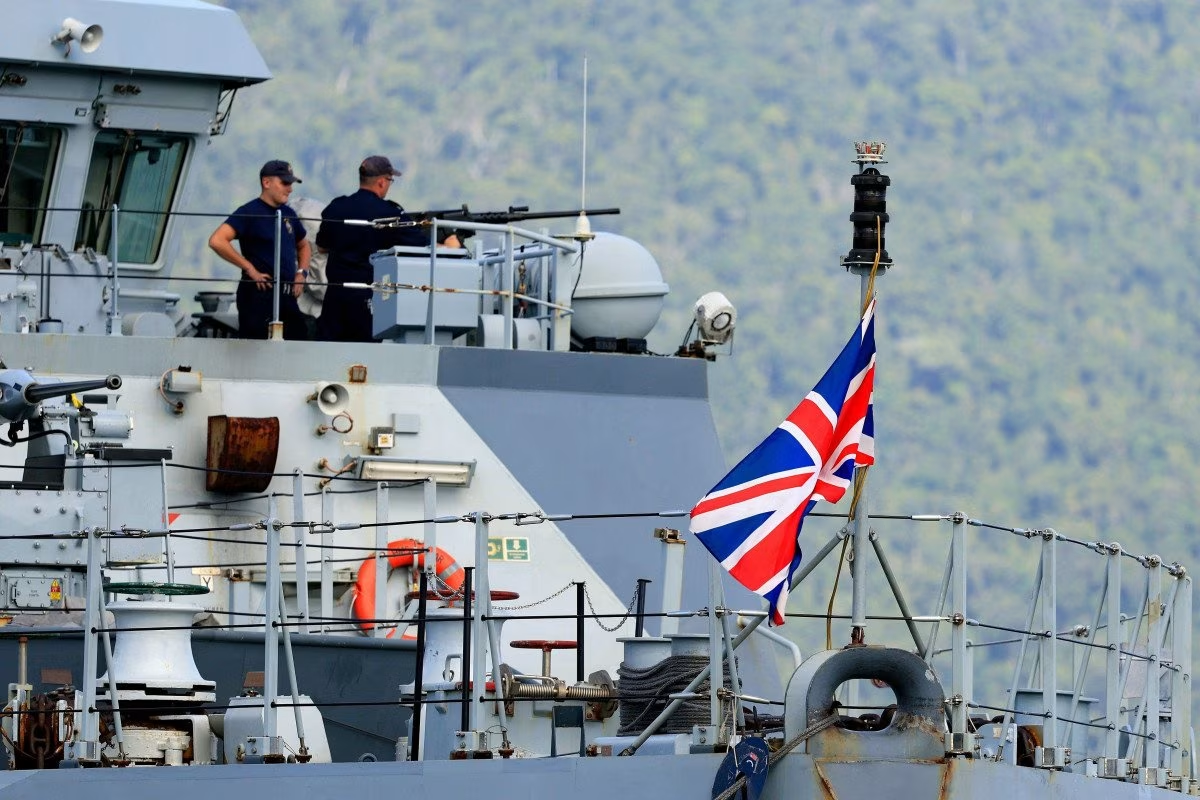
Babcock International, a prominent player in the UK defence sector, has recently unveiled a concerning financial trajectory, revealing a substantial drop in annual profits. The defence contractor, known for its involvement in various sectors including marine, nuclear, land, and aviation, reported a pre-tax profit of £283.7 million for the year ending March 2026, a decrease from the previous year’s figure of £329.1 million. This downturn has been strongly linked to a hefty £140 million charge associated with its contract to build five Type 31 frigates for the Royal Navy, which has garnered significant attention due to mounting costs and production challenges.
In the latest financial disclosures, Babcock indicated that while underlying operating profits decreased to £293 million from £362.9 million, removing the extraordinary charge would have resulted in a remarkable 19 per cent increase, pushing underlying operating profits to £433 million. This disparity illustrates a complex landscape where the company exhibits operational resilience yet remains vulnerable to external contract pressures, especially those stemming from government contracts.
This latest announcement is particularly pertinent given Babcock’s prior warnings in May, when it signalled that profits were likely to suffer significantly from a third provision for losses incurred on the Type 31 project. This particular contract, signed with the Ministry of Defence three years prior, has proven challenging, with cumulative charges amounting to £290 million, including £100 million in the prior year and a further £90 million this year. Compounded by these factors, Babcock’s warning underscores a troubling reality – the financial burdens associated with government contracts can rapidly escalate beyond initial expectations.
The Type 31 frigate programme, touted as a “state-of-the-art warship” initiative, has faced significant hurdles during its assembly in Scotland. Located at Babcock’s dedicated Assembly Hall facility in Rosyth, the construction of these vessels represents a pivotal commitment to the UK’s maritime capability. Remarkably, at its peak, the Type 31 project supported a workforce of 1,250 across the UK and created an additional 1,250 jobs within the broader maritime supply chain along with 150 new apprenticeships. However, as costs spiral, the potential for future employment in this sector may be jeopardised.
As part of the broader picture, Babcock also announced its intention to raise its annual dividend by 15 per cent to 7.5 pence a share, signalling a commitment to shareholder value despite inherent risks within its operational framework. The company has initiated a £200 million share buy-back programme for the current financial year, reinforcing its strategy toward maintaining investor confidence amidst a backdrop of financial uncertainty. These measures exhibit Babcock’s attempts to strike a balance between operational exigencies and shareholder expectations, even while navigating an unpredictable economic landscape.
The share price had experienced a remarkable resurgence earlier in the year, driven by a turnaround strategy and enhanced government spending on defence. Babcock’s stock reached a record high of £15.27, a significant increase from previous lows. However, it has since plummeted, closing at 984.5 pence on Monday, representing a drop of 5.9 per cent in just one trading day, which highlights the volatility inherent in defence contracting, particularly under the shadow of governmental fiscal constraints.
Among the current challenges, Babcock’s portfolio of forward contracts has decreased to £9.8 billion from £10.4 billion during the same period last year. This reduction raises questions about the company’s future revenue streams amid rising costs and delays linked to government decisions, most notably the significant holdup regarding the UK’s defence investment plan, which remains sorely awaited by many in the sector. The need for clarity regarding upcoming contracts is paramount, as defence contractors such as Babcock are poised to pivot on the outcomes of these strategic decisions.
Despite the grim statistics, Babcock’s chief executive David Lockwood, soon to be succeeded by Harry Holt, the head of the company’s nuclear division, maintains a cautiously optimistic perspective on the evolving landscape. He articulated a belief that the defence sector is witnessing a structural shift towards increased demand for advanced and adaptable capabilities, a notion which underscores the importance of emerging technologies in modern warfare.
This sentiment aligns with the company’s ongoing partnerships, such as the expansion of its collaboration with HII, the largest military shipbuilder in the United States, encompassing future nuclear submarine programmes. Such engagements could prove crucial in reinforcing Babcock’s footprint in a competitive international defence market. Furthermore, Babcock has recently secured a six-month contract dedicated to maintaining continuity of submarine fleet support and naval base management services, which could signal a strategic pivot necessary to ensure ongoing viability amidst operational challenges.
Attention to environmental sustainability also appears to be embedded within Babcock’s operational methodologies. The Rosyth site is on track to ensure that 90 per cent of materials are either reused or recycled, reflecting a growing awareness of the need for ecological responsibility within defence manufacturing. The facility recently marked a milestone by successfully removing 40 per cent of materials from the Swiftsure class submarine, which has been docked since 2024 in preparation for dismantling. This commitment to sustainability not only enhances public perception but also aligns with broader governmental objectives focusing on responsible and sustainable defence practices in the modern era.
In navigating the choppy waters of the defence contracting landscape, Babcock finds itself at a critical juncture, one that demands both strategic foresight and agile responsiveness to shifting market dynamics. With increasing pressure on cost management and delivery timelines, the company is compelled to recalibrate its approaches while ensuring it upholds commitments to staff, stakeholders, and the defence priorities of the nation. As global tensions escalate and the call for robust military capabilities intensifies, Babcock’s ability to adapt and innovate in the face of adversity may well be pivotal in determining its future trajectory within the UK’s defence industrial landscape.
Post Disclaimer
The following content has been published by Stockmark.IT. All information utilised in the creation of this communication has been gathered from publicly available sources that we consider reliable. Nevertheless, we cannot guarantee the accuracy or completeness of this communication.
This communication is intended solely for informational purposes and should not be construed as an offer, recommendation, solicitation, inducement, or invitation by or on behalf of the Company or any affiliates to engage in any investment activities. The opinions and views expressed by the authors are their own and do not necessarily reflect those of the Company, its affiliates, or any other third party.
The services and products mentioned in this communication may not be suitable for all recipients, by continuing to read this website and its content you agree to the terms of this disclaimer.
Related Posts


Previous Post
Next Post