
Now Reading: BP Faces Market Turmoil After Sudden Ousting of Chairman Amid Governance Concerns
-
01
BP Faces Market Turmoil After Sudden Ousting of Chairman Amid Governance Concerns
BP Faces Market Turmoil After Sudden Ousting of Chairman Amid Governance Concerns
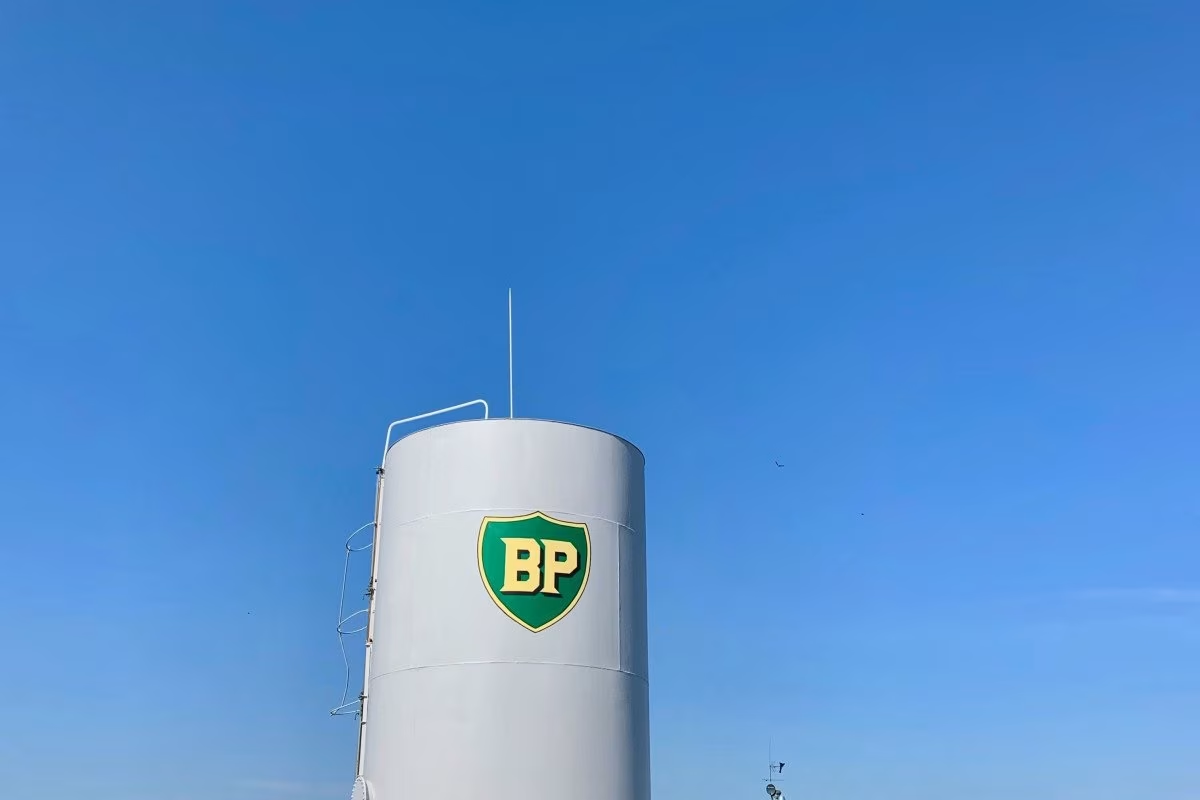
The recent dismissal of Albert Manifold as chairman of BP has sent shockwaves through the energy sector, erasing nearly £4 billion from the company’s market valuation. This dramatic turn of events has not only left investors concerned but has also thrown into sharp relief the ongoing governance challenges that have beset the oil giant in recent years. Just months into his tenure, Manifold was abruptly removed from his position following unanimous board votes fuelled by “serious concerns” regarding governance standards and conduct. The implications of this decision extend beyond the immediate fallout of plummeting share prices, exposing deeper vulnerabilities within BP’s corporate structure.
Manifold, who took on the role in July last year and officially started in October, was expected to spearhead a much-needed turnaround for a company beleaguered by internal strife and market volatility. However, the board’s insistence on his immediate departure indicates that troubling issues may have been brewing beneath the surface for some time. Senior independent director Dame Amanda Blanc expressed the board’s collective disappointment in the latest developments, citing unacceptable behaviours related to governance and oversight. Yet, amidst the whirlwind of accusations, no specifics regarding the nature of these concerns have been shared, leaving room for speculation and confusion among stakeholders.
In a surprising twist, Manifold himself has publicly refuted the narrative surrounding his exit, claiming he was “removed without warning and without explanation.” He expressed his disagreement with the characterisation of his conduct, arguing that during his brief tenure he had pushed for significant changes within the company. Among his key initiatives were efforts to cut costs and challenge excessive practices, all aimed at reinstating BP’s integrity in a rapidly evolving market plagued by shifting dynamics and increasing scrutiny.
This incident highlights a persistent pattern of instability at the helm of BP. It is the third leadership shake-up in under three years, with the company grappling not only with external pressures but also with its internal governance mechanisms. Earlier leadership changes, including the sudden departures of former Chief Executives Bernard Looney and Murray Auchincloss, have further exacerbated the perception of a chaotic governance structure. Such upheaval raises important questions about the effectiveness of the board in its selection processes and due diligence when appointing high-ranking officials. The need for a transparent account of Manifold’s dismissal may become paramount, as stakeholders demand insight into what led to these governance failures.
Despite the recent turbulence, BP’s share price had actually begun to recover in the early months of 2026, climbing approximately 20 per cent thanks in part to a surge in oil prices amid geopolitical tensions in the Middle East. Analysts had pointed to this upswing as indicative of a strategic reset that could potentially yield long-term stability for the company. However, this promising trajectory has now been jeopardised by the ousting of a chairman who was seen as playing a pivotal role in revitalising the company’s relationship with investors.
The current situation also brings to light the complexities of corporate governance within major global firms. The hastiness of Manifold’s removal suggests that there might have been fundamental disagreements within the board regarding the direction BP should take, particularly as it re-evaluates its commitments to climate change and sustainability. Indeed, activist investors like Elliott Management have been pressuring the company to pivot away from its green investments in a bid to prioritise conventional revenue streams amid volatile oil markets. The acrimony surrounding Manifold’s dismissal raises further concerns about the potential for a fractured board unable to devise a coherent strategy in line with investor expectations.
Interestingly, the backdrop of Manifold’s dismissal resonates with a broader narrative playing out across corporate Britain, where questions of accountability and governance have come to the forefront. Analysts, like Lindsey Stewart from Morningstar, argue that BP must now grapple with the dual challenges of regaining investor trust and establishing a stable governance framework. As loyalty from stakeholders wanes and shareholder revolts become increasingly commonplace, the stakes for BP have never been higher. The trust deficits created by high-profile exits could very well hinder the company’s ability to present a united front in the face of mounting operational challenges.
The consequences of this leadership upheaval extend far beyond the boardroom. Public perception of BP, a company already tarnished by its past environmental record, may suffer as investors grapple with the implications of their chairman’s abrupt exit. The need for transparency not only in governance practices but also in the decision-making processes that underpin such movements could shape the outlook for BP’s future viability. As it positions itself to compete in a rapidly changing energy landscape, clarity and stability in leadership remain paramount.
The ongoing saga at BP serves as a stark reminder of the realities faced by large corporations in a time of unprecedented change. Navigating the intersection of governance, investor expectations, and societal responsibility has never been more complex. While Manifold’s brief tenure might have been marked by aspirations for reform, the turbulence that has followed illustrates the fragility of corporate stability in an unpredictable environment. The coming days may reveal more about the board’s rationale in this matter, but the immediate impact on BP’s market performance is a vivid testament to the intricacies of corporate governance and its vital importance in shaping the future of one of the world’s foremost energy players.
Post Disclaimer
The following content has been published by Stockmark.IT. All information utilised in the creation of this communication has been gathered from publicly available sources that we consider reliable. Nevertheless, we cannot guarantee the accuracy or completeness of this communication.
This communication is intended solely for informational purposes and should not be construed as an offer, recommendation, solicitation, inducement, or invitation by or on behalf of the Company or any affiliates to engage in any investment activities. The opinions and views expressed by the authors are their own and do not necessarily reflect those of the Company, its affiliates, or any other third party.
The services and products mentioned in this communication may not be suitable for all recipients, by continuing to read this website and its content you agree to the terms of this disclaimer.
Related Posts


Previous Post
Next Post

