
Now Reading: Challenges Loom for Harvey Nichols as Owner Seeks Sale Amid Financial Struggles
-
01
Challenges Loom for Harvey Nichols as Owner Seeks Sale Amid Financial Struggles
Challenges Loom for Harvey Nichols as Owner Seeks Sale Amid Financial Struggles
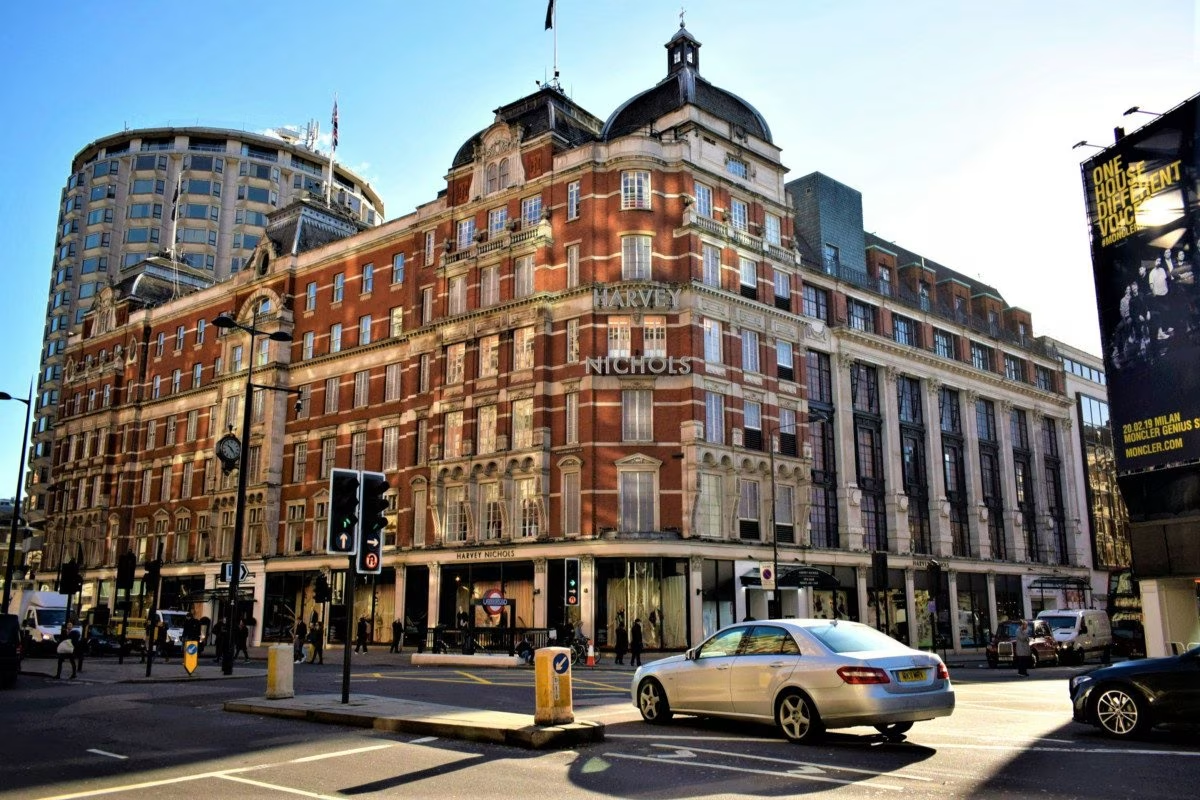
Harvey Nichols, the renowned luxury department store chain, is reportedly facing severe financial difficulties, prompting its billionaire owner to actively seek a buyer. The Knightsbridge flagship store, known for its high-end offerings and distinctive shopping experience, has become a focal point of concern as the chain grapples with mounting losses and significant debts. This situation starkly illustrates the broader pressures facing luxury retail in an evolving economic landscape.
In recent years, the retail sector has undergone a seismic shift, with the pandemic exacerbating existing challenges. Consumer habits have transformed, and luxury brands find themselves competing not only against each other but also against the burgeoning second-hand market, which appeals to a more sustainability-conscious consumer base. Harvey Nichols has not been immune to these trends. Once a powerhouse of luxury retailing, the chain has struggled to maintain its allure amidst fierce competition and changing shopping behaviours.
According to sources close to the matter, the current owner’s attempts to offload the chain are driven by a desire to address the financial realities that have plagued the business for several years. Despite the historical significance of Harvey Nichols, the brand has been wrestling with declining sales and a reputation that, while still elevated, no longer commands the same unquestioned loyalty from consumers.
Reports indicate that the possibility of a sale comes on the back of continuous efforts to restructure the business, including attempts to redefine its market positioning and re-engage its customer base. The Knightsbridge store, which accounts for a disproportionately high share of Harvey Nichols’ overall revenue, remains a national treasure in the luxury marketplace. However, its ongoing viability is under intense scrutiny. Analysts suggest that the store has been particularly vulnerable, with luxury goods being more susceptible to shifts in consumer behaviour during economic downturns.
While some luxury brands have managed to pivot successfully to meet new consumer demands, others have found themselves lagging behind. Harvey Nichols appears to fall into the latter category, as its attempts to modernise its offering continue to face hurdles. The challenges are not solely about branding or consumer desire; they are exacerbated by substantial operational costs and the complexities of maintaining high standards in a demanding retail environment.
The high-profile difficulties facing Harvey Nichols reflect broader trends in the luxury retail sector, where even established names are being forced to rethink their strategies. The competitive landscape has shifted dramatically in recent years, with many consumers now favouring direct-to-consumer models, often facilitated by digital innovation. This shift has prompted longstanding brands to reassess their traditional retail models, leading to significant overhauls in how they approach the market.
The situation is further complicated by the overall economic climate. With inflationary pressures rising and disposable incomes shrinking, consumers are becoming more discerning about their purchases. This is particularly evident in the luxury sector, where the reliance on affluent shoppers is proving increasingly precarious. Even as high-net-worth individuals continue to make significant purchases, the entry-level luxury market is shrinking, forcing brands to reconsider their pricing strategies and product offerings.
Among the potential buyers for Harvey Nichols are various private equity firms and retail magnates looking for an opportunity to rejuvenate the brand. Investment in revitalising the chain could involve substantial changes to both its physical and online business components. Successfully navigating a sale could provide much-needed capital for the new ownership to focus on long-term viability while addressing the immense challenges that lie ahead.
While the future of Harvey Nichols remains uncertain, the current predicament serves as a poignant reminder of the volatility inherent in the retail sector. The industry is in a state of flux, with legacy brands grappling with their identities and struggling to maintain relevance in an environment that is evolving at breakneck speed. Consumers are increasingly turning their attention to sustainability and ethical considerations, placing additional pressure on brands, especially in the luxury segment.
The transformative effects of technology continue to reshape the retail landscape, impacting everything from consumer research to purchase decisions. The rise of e-commerce has forced luxury retailers to rethink their approach, and many are investing heavily in digital platforms and omnichannel strategies. The global pandemic accelerated this trend, compelling retailers to adapt at an unprecedented pace. However, for many, including Harvey Nichols, these efforts have not yet yielded the expected results, leaving them vulnerable to the economically driven changes in shopper behaviour.
As the search for a new owner continues, the question remains: can Harvey Nichols reinvent itself in a way that captures the imagination of today’s discerning consumers? Should a suitable buyer emerge, significant investment will be required to avoid further entrenchment in the challenges that have long plagued the retailer. Whether these efforts can recapture the magic that once made Harvey Nichols a go-to destination for luxury shoppers is yet to be seen.
This unfolding story not only highlights the struggles of a single department store but also raises crucial questions about the future of luxury retail in the United Kingdom. As consumers increasingly demand more from brands—transparency, sustainability, and a genuine connection—the path forward for legacy retailers becomes increasingly convoluted. Whether Harvey Nichols can adapt successfully or become a relic of a bygone era will ultimately hinge on a new vision—one capable of marrying tradition with modernity in an ever-changing market landscape.
Post Disclaimer
The following content has been published by Stockmark.IT. All information utilised in the creation of this communication has been gathered from publicly available sources that we consider reliable. Nevertheless, we cannot guarantee the accuracy or completeness of this communication.
This communication is intended solely for informational purposes and should not be construed as an offer, recommendation, solicitation, inducement, or invitation by or on behalf of the Company or any affiliates to engage in any investment activities. The opinions and views expressed by the authors are their own and do not necessarily reflect those of the Company, its affiliates, or any other third party.
The services and products mentioned in this communication may not be suitable for all recipients, by continuing to read this website and its content you agree to the terms of this disclaimer.
Related Posts


Previous Post
Next Post

