
Now Reading: New Car Registrations in the UK Surge to Pre-Pandemic Highs
-
01
New Car Registrations in the UK Surge to Pre-Pandemic Highs
New Car Registrations in the UK Surge to Pre-Pandemic Highs
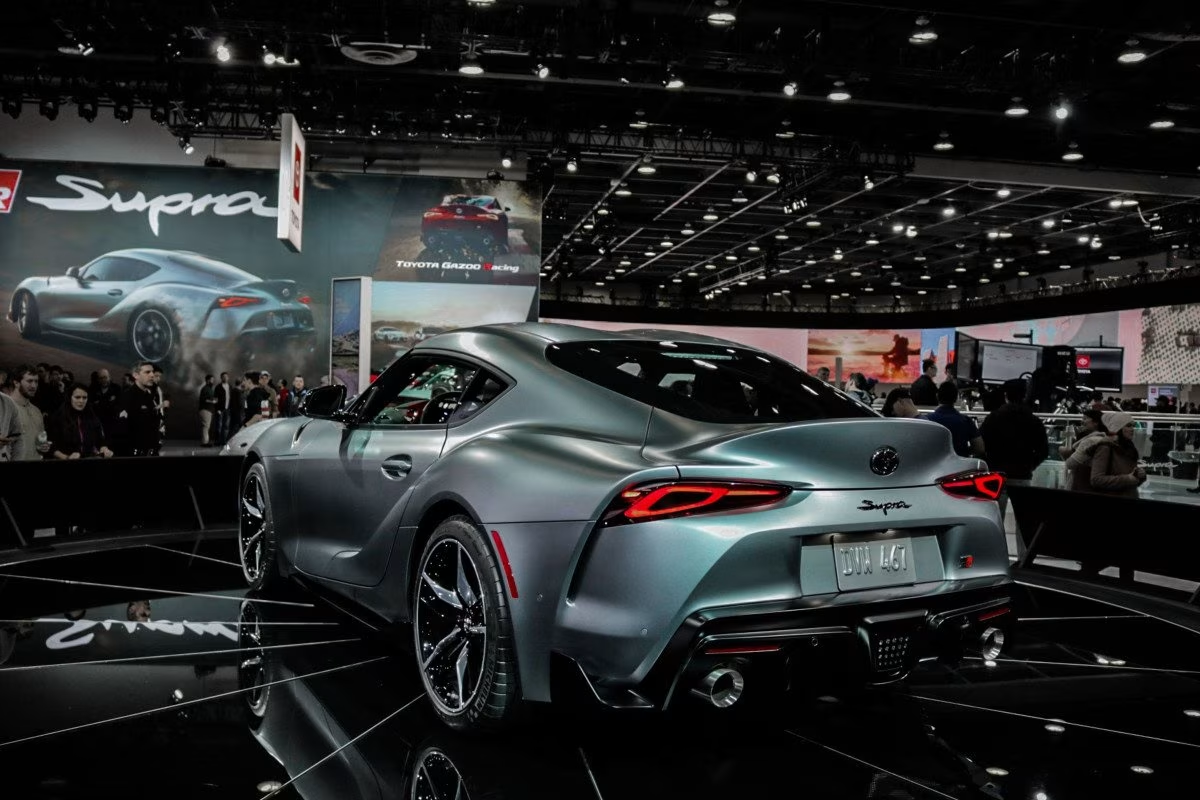
As the UK motor market emerges from the shadow of the pandemic, new car registrations have surged to levels not seen since before COVID-19 reshaped consumer behaviours. A notable upswing in demand for electric vehicles, alongside heightened imports of Chinese automotive brands, has galvanised the market, propelling new car sales to impressive new heights. In May alone, registrations increased by over seven per cent, with approximately 160,000 new cars hitting the roads, bringing the total for the year to nearly 924,000—a year-on-year growth of almost nine per cent.
Despite this resurgence, it remains evident that the industry is striving to fully recover from the pandemic’s grip. While the figures are commendable within the context of recent years, they still fall short of May 2019’s 183,000 sales—a benchmark prior to the significant disruptions caused by the health crisis. Nevertheless, the electric vehicle segment has emerged as a key driver of this recovery. Sales rose by thirty-four per cent, with nearly 44,000 electric units sold in May, establishing an impressive market share of 27.3 per cent. In stark contrast, the share of petrol vehicle sales plunged to 41 per cent while hybrids and plug-in hybrids accounted for another 26 per cent. Diesel vehicles languished at below five per cent of all registrations.
The dynamics at play in the automotive landscape are complex and multifaceted. Industry experts surmise that the soaring sales of electric cars are a counterintuitive outcome of geopolitical tensions, notably the erosion of consumer confidence spurred by rising petrol prices—an impact linked directly to the ongoing crisis in the Gulf region exacerbated by former President Trump’s policies. As fuel prices remain persistently high, many drivers are beginning to reconsider their options, especially as the cost of running electric vehicles increasingly becomes more appealing. Nick Williams, transport managing director at Lloyds Banking Group, noted that the evolving affordability landscape has led to an emerging consensus among consumers that electric vehicles represent not merely a future aspiration but a practical solution for their next car purchase.
This shift highlights a critical juncture in the automotive sector as the UK grapples with the government’s ambitious zero-emission vehicle (ZEV) mandate, which targets that one-third of all cars sold this year should be electric. Although the sales figures indicate significant progress towards this goal, the reality appears more nuanced. Some manufacturers, already lagging in electric vehicle production, are advocating for lower targets amidst claims of insufficient consumer demand. Conversely, there exists strong sentiment within the industry that the government must maintain its rigorous stance to avoid compromising the pace of transition towards electric mobility.
Tanya Sinclair, head of Electric Vehicles UK, asserted the market’s readiness by highlighting the twenty-seven per cent electric car market share. She challenged the narrative that suggests consumer reluctance by emphasising the necessity for a robust supply chain, enhancing charging infrastructure, and innovative policy measures to match the growing consumer appetite. Sinclair’s remarks underscore a broader recognition within the industry that the transition to electric vehicles is not merely a distant aspiration but a contemporary reality.
Beyond the electric vehicle paradigm, the increasing presence of Chinese brands within the UK market has reshaped the competitive landscape. Notably, the Chery group, whose Jaecoo 7 has become the third best-selling car in the UK for 2026, highlights this trend. This model, often referred to in the media as a “Range Rover clone,” has capitalised on a significant gap in the UK market by offering a competitively priced alternative. Priced between £30,000 and £35,000, the Jaecoo 7 has sold over 20,000 units in its first year, eclipsing several legacy brands such as Nissan’s Qashqai and Vauxhall’s Corsa.
The rise of Chery’s brands, which include Jaecoo and Omoda, signifies a profound shift in consumer preferences. With the company’s sales figures reaching 57,000 vehicles thus far, Chery has overtaken incumbents like Ford, which delivered 48,000 cars this year. More remarkably, this surge outpaces even best-selling Japanese brands like Toyota and Nissan, suggesting a seismic shift in the perceptions of quality and value associated with Chinese automotive products.
What differentiates the Jaecoo 7 from many of its competitors is its primary focus on private buyers, a strategic departure from common marketing practices among rivals which typically target corporate fleets. In less than two years since entering the UK market, the Jaecoo brand claims that an impressive sixty-three per cent of its sales were directed at private consumers. As the automotive landscape continues to transform, the established perceptions of brand loyalty and consumer trust are being reshaped as buyers increasingly gravitate toward affordability and value.
This evolving landscape poses questions for traditional car manufacturers as they grapple with the implications of an expanding competitive array that includes more affordable vehicles tailored to diverse consumer needs. The changing dynamics also reflect broader trends in consumer behaviour and economic patterns, suggesting that priorities around sustainability and fiscal responsibility will likely shape future automotive designs and innovations.
Meanwhile, the government’s response to the swiftly changing automotive environment has begun to shift towards proactive measures designed to bolster consumer confidence in electric vehicle adoption. The recently established electric car grant offers drivers up to £3,750 off the cost of a new electric vehicle as part of a broader £600 million investment to enhance the UK’s charging infrastructure. Keir Mather, a junior transport minister, articulated that the booming registrations are evidence of a gradual shift towards electric vehicles cementing their place within British society.
Despite the progress encapsulated within the burgeoning statistics, industry leaders maintain a certain degree of caution. Mike Hawes, chief executive of the Society of Motor Manufacturers and Traders, commented on the underlying complexities but reinforced the notion that British consumers are responding positively to a market that is increasingly characterised by abundant choices, both from new entrants and established brands. This response, however, rests upon the sectors effectively addressing emerging consumer anxieties surrounding electric vehicle adoption, including the prevalence and accessibility of charging points.
As the UK car market navigates this transformative period, the interplay of established manufacturers, emerging brands, and evolving consumer expectations will continue to dictate the pace and direction of the industry’s evolution. In an era marked by unprecedented change, it is clear that the future of the automotive sector is being shaped not just by new technologies, but also by shifting paradigms around mobility, sustainability, and affordability. The ramifications of these changes will resonate well beyond the simply statistical, redefining mobility options for future generations and forging a new automotive narrative for the UK’s post-pandemic landscape.
Post Disclaimer
The following content has been published by Stockmark.IT. All information utilised in the creation of this communication has been gathered from publicly available sources that we consider reliable. Nevertheless, we cannot guarantee the accuracy or completeness of this communication.
This communication is intended solely for informational purposes and should not be construed as an offer, recommendation, solicitation, inducement, or invitation by or on behalf of the Company or any affiliates to engage in any investment activities. The opinions and views expressed by the authors are their own and do not necessarily reflect those of the Company, its affiliates, or any other third party.
The services and products mentioned in this communication may not be suitable for all recipients, by continuing to read this website and its content you agree to the terms of this disclaimer.
Related Posts


Previous Post
Next Post

