
Now Reading: Saudi Aramco’s Profits Surge Amid Escalating Global Turmoil
-
01
Saudi Aramco’s Profits Surge Amid Escalating Global Turmoil
Saudi Aramco’s Profits Surge Amid Escalating Global Turmoil
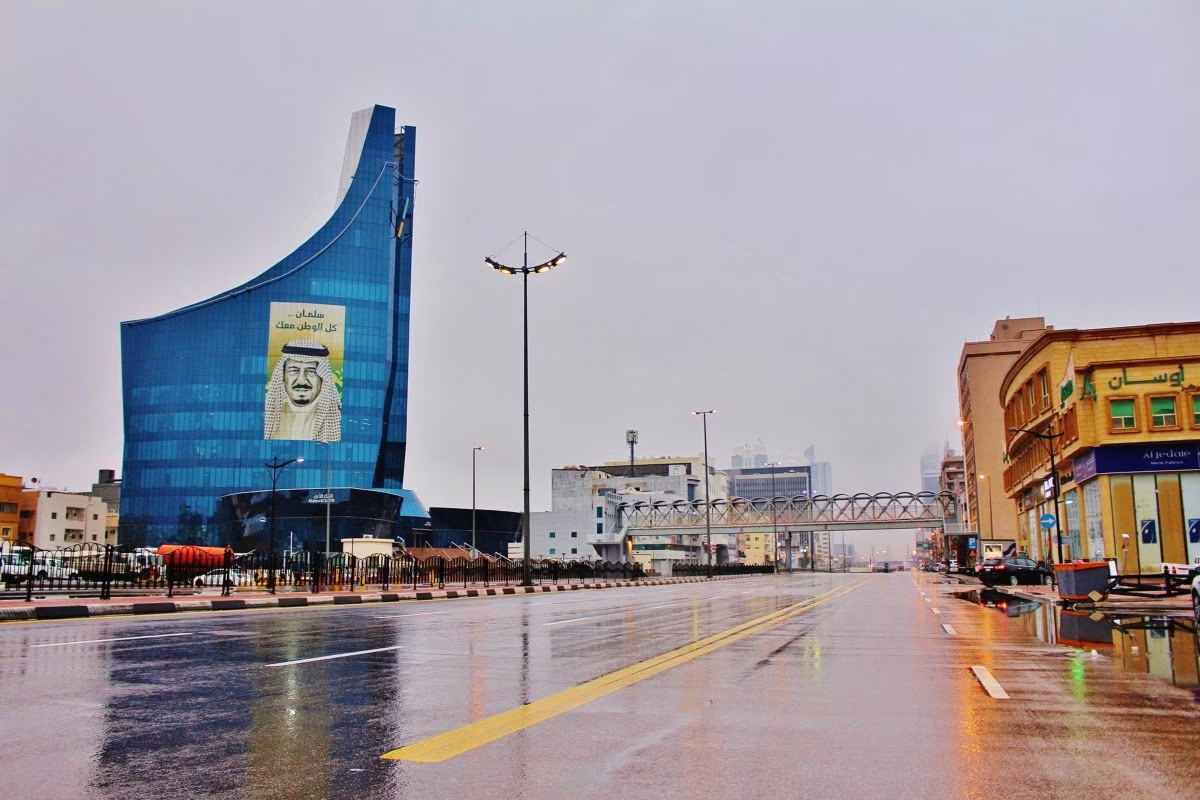
In a striking revelation, Saudi Arabia’s state-owned oil titan, Saudi Aramco, has reported an impressive £5 billion increase in profits, a notable windfall that has largely stemmed from the soaring oil prices triggered by the ongoing conflict in Iran. This development not only underscores Aramco’s resilience in navigating turbulent geopolitical waters but also raises broader questions about the future dynamics of the global energy market as economic landscapes continue to shift.
The Catalytic Effect of Geopolitical Tensions
The escalating tensions surrounding Iran have had far-reaching implications for energy prices and supply chains. As hostilities intensified, the uncertainty surrounding oil production levels in the region created a ripple effect, pushing prices upward and giving further leverage to oil-producing nations. For Saudi Aramco, which is reputed to be the largest oil company in the world, the reinforced market conditions have thus provided a substantial boon. Analysts suggest that the profits reported signal not only operational success but also an adept ability to capitalise on crisis situations that reshape market dynamics.
Saudi Aramco, through its remarkable profit surge, exemplifies how national oil companies can benefit from external volatility. The company has effectively become not just a national asset but a pivotal player on the global stage. Given its strategic role in managing the world’s oil supply, the repercussions of such a profit increase stretch well beyond the boardroom discussions in Riyadh. This emergence brings with it both opportunities and responsibilities in an era where energy security is intertwined with geopolitical stability.
Market Responses and Consumer Impact
As the oil juggernaut celebrates its financial performance, the implications for consumers and businesses both within Saudi Arabia and internationally cannot be overstated. Rising oil prices invariably translate to increased costs for consumers, impacting everything from transportation costs to household energy bills. The fragility of the global economy, made ever more apparent through the pandemic, now faces another layer of complexity. Higher energy prices are expected to exacerbate inflationary pressures in various economies across the globe, leading to concerns over potential stagflation, where stagnant growth accompanies high inflation rates.
Moreover, the interconnection between energy prices and international politics raises a broader discourse about the sustainability of this model. Increased profits for Aramco may serve short-term interests, but they also speak to a long-term vulnerability—namely, the dependence on fossil fuels as geopolitical leverage becomes more pronounced. With the global push towards renewable energy accelerated by climate change concerns, the question arises: How long can traditional oil giants thrive in a transitioning energy landscape?
The Balancing Act of Energy Policy
For Saudi Arabia, a nation historically characterised by its oil wealth, the balancing act of transitioning towards a more diversified economic model while capitalising on current strengths is imperative. The Kingdom has unveiled its Vision 2030 plan, aiming to reduce its economic dependency on oil revenues by investing in non-oil sectors and renewable energy sources. The recent financial uplift from Aramco presents both opportunities and challenges in aligning this vision with the pressures exerted by the current geopolitical climate.
Investors are undoubtedly attracted to the burgeoning profits realised by Aramco, but there remains a palpable tension between capitalising on immediate gains and pursuing long-term sustainability initiatives. As international investors increasingly seek to align their portfolios with environmental, social, and governance (ESG) criteria, the Saudi oil behemoth faces pressures to innovate. The capacity of Saudi Arabia to pivot towards renewables while maintaining its oil production levels remains to be seen, and many in the arena of global finance will be watching closely.
The Iran Factor in Oil Supply Dynamics
The Iranian conflict, marked by its historical complexities, has now taken centre stage as a critical juncture for oil markets. Any potential disruptions to Iranian oil exports generate a nervous atmosphere among traders, thus contributing to price volatility. The tangible effects of this insecurity extend not only to Aramco’s bottom line but also ripple through to other oil-exporting nations, creating an intricate web of interdependencies and competitive dynamics.
As countries assess their energy strategies, the alignment or misalignment of interests surrounding Iran poses risks to broader oil supply chains. Traditional alliances may evolve, causing shifts in trading patterns and affecting countries reliant on Iranian oil. The resulting volatility could invigorate discussions about alternative energy supplies and enhance the urgency of diplomatic engagements aimed at stabilising the region.
Looking Forward: Navigating Uncertainty
The international community is acutely aware of the multifaceted consequences of rising energy prices exacerbated by regional conflicts. While Saudi Aramco’s profit report paints a picture of operational success, it simultaneously highlights vulnerabilities in the global economic landscape that can swiftly shift with changing geopolitical tides. The potential for instability remains high, demanding agility and responsiveness from energy stakeholders worldwide.
The focus for observers will now shift to how Aramco plans to navigate the dual pressures of enhancing profitability while adhering to the imperatives of sustainability and diversification. The fusion of profits with responsibility may come to define Saudi Arabia’s approach in this new era, with implications that will ripple throughout the global economic framework. As such, the narrative will continue to unfold, shaped by a mixture of strategic foresight, economic adaptation, and the ever-present spectre of geopolitical uncertainty. The world watches and waits to see how both the fortunes of Saudi Aramco and the global oil market will evolve in tandem with the pressing realities of the 21st century.
Post Disclaimer
The following content has been published by Stockmark.IT. All information utilised in the creation of this communication has been gathered from publicly available sources that we consider reliable. Nevertheless, we cannot guarantee the accuracy or completeness of this communication.
This communication is intended solely for informational purposes and should not be construed as an offer, recommendation, solicitation, inducement, or invitation by or on behalf of the Company or any affiliates to engage in any investment activities. The opinions and views expressed by the authors are their own and do not necessarily reflect those of the Company, its affiliates, or any other third party.
The services and products mentioned in this communication may not be suitable for all recipients, by continuing to read this website and its content you agree to the terms of this disclaimer.
Related Posts


Previous Post
Next Post

