
Now Reading: The Bank of England’s Controversial Decision to Remove Winston Churchill from Banknotes
-
01
The Bank of England’s Controversial Decision to Remove Winston Churchill from Banknotes
The Bank of England’s Controversial Decision to Remove Winston Churchill from Banknotes
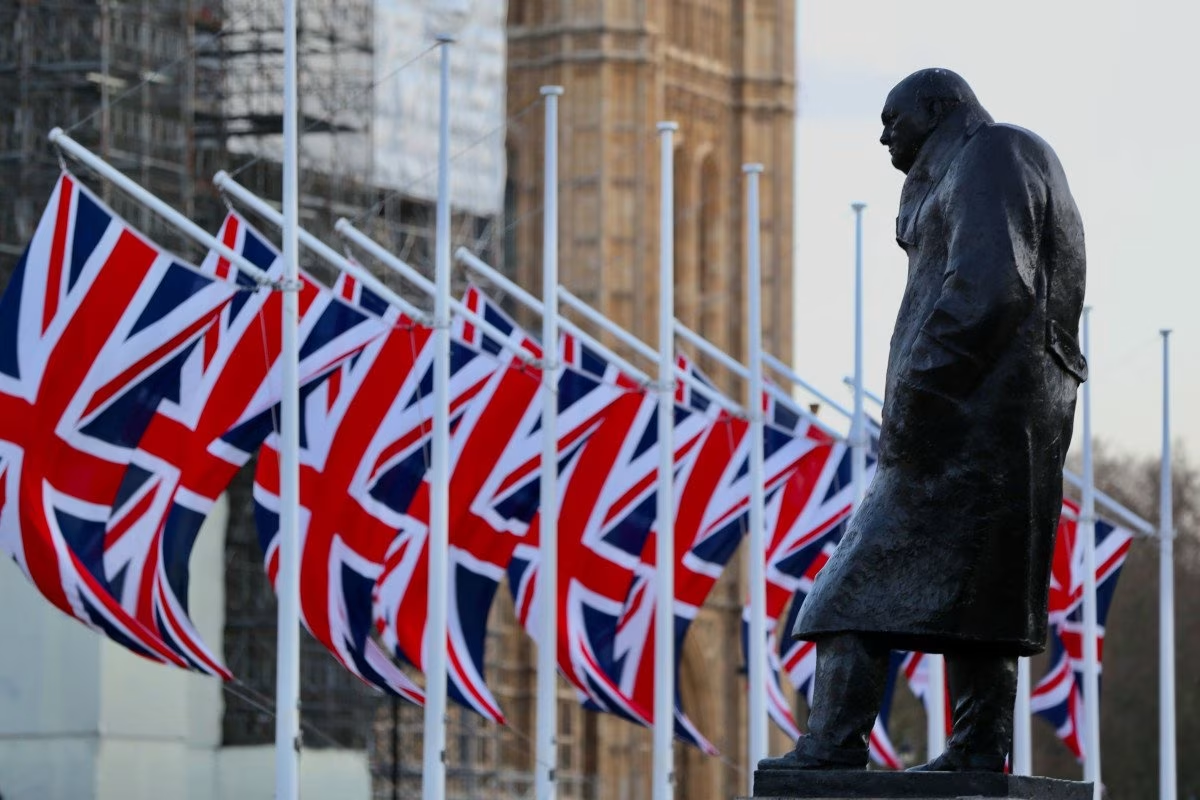
In a notable shift in the representation of historical figures on British currency, the Bank of England has announced the removal of Winston Churchill’s likeness from its banknotes. This decision, described as a move away from what some have termed “elitist and divisive” figures, marks a significant pivot in how the nation perceives its past and present leaders. The Bank’s announcement has provoked a wave of reactions from various segments of society, ranging from supporters of the change, who applaud a more inclusive approach to national representation, to critics who assert that this decision undermines the significance of historical leadership.
Winston Churchill, perhaps one of the most iconic figures of British history, is widely celebrated for his leadership during World War II and his role in defining modern Britain. His presence on the £5 banknote was a symbol not only of national pride but also of a complex legacy that invokes both admiration and critique. The decision to erase his image raises essential questions about the responsibilities of institutions in representing historical narratives, particularly those that evoke mixed feelings among contemporary audiences.
According to sources at the Bank, the decision to pivot away from representations of figures like Churchill comes after receiving advice that deemed such portrayals to be misleading or out of touch with modern values. The Bank has articulated a vision for a more representative collection of individuals who reflect the diversity and complexity of contemporary British society. This effort appears to seek a balance between honouring historical contributions and addressing the nuanced realities of Britain’s colonial past and socio-political fabric today.
Christina Smith, a spokesperson for the Bank, articulated the rationale behind this shift. “We understand that our history is not merely a collection of commemorative figures, but a mosaic that includes the voices and experiences of all British citizens. Our approach aims to encompass a broader narrative where all are seen and represented,” she stated. This statement delineates a broader transition within cultural institutions to reconsider who is worthy of commemoration and how their contributions to society are framed. In this context, the removal of Churchill’s image raises the importance of dialogues surrounding heritage and identity.
However, the decision has not been without its detractors. Loyalists to Churchill’s legacy argue vehemently against what they see as a symbolic erasure of a key historical figure. “This is nothing short of an assault on our history,” declared Andrew Maynard, a historian and vocal Lincolnshire resident who has written extensively about Churchill. “To dismiss Churchill’s contributions is to deny the sacrifices made during tumultuous times. His leadership was pivotal, and we must not allow the present to unduly shape our interpretations of the past.” Such sentiments echo within the wider community, illustrating the tension between historical acknowledgment and modern interpretations of leadership and morality.
This controversy arises within a broader context of historical reconsideration, as post-colonial narratives increasingly challenge traditional views of celebrated figures. Numerous institutions, from universities to galleries, have recently grappled with how their collections and representations align with current societal values. In this vein, the Bank of England’s decision aligns with a wider cultural movement pushing for an ownership of past moral failings and the desire for inclusivity in narratives that shape national identity.
As public discourse transcends mere academic circles and spills into popular consciousness, Churchill’s removal from banknotes ignites discussions about the meaning of representation in modern Britain. Figures such as Nelson Mandela or Mary Seacole may lead individuals in their call for a richer depiction of diversity in British history, and there are growing calls for replacing historical heroes with contemporary icons who represent modern British values.
The notion that a significant public entity like the Bank of England should reflect cultural changes has prestige and importance. Critics of the decision warn against a slippery slope whereby historical nuances could become lost to a reductively egalitarian approach. Disparities in historical impact cannot simply be flattened into contemporary expectations of diversity and representation.
This nuanced debate underscores the complexities of nationhood. The legacy one leaves is often multifaceted. Churchill’s legacy cannot be ignored simply due to its inconvenience in a contemporary context. While this decision may resonate with those who seek a more inclusive representation in public spaces and symbols, it also serves as a reminder of the struggles faced in reconciling with contentious legacies.
The Bank’s comprehensive review process has triggered extensive conversations throughout the country. Public forums and debates have emerged, providing a platform for numerous perspectives on historical representation. Citizens in pubs, parks and online discussions debate the ramifications of the decision at length, demonstrating the very essence of British engagement with history. In this light, the future of British currency symbols may not quaintly rest in the solitarily revered figures of the past, but rather evolve to embody a collective narrative representing the wide spectrum of voices held within the nation.
The removal of Churchill is emblematic of broader social changes presently at play within the UK; it has stirred a pot of discomfort and dialogue that challenges not only how the British view their past but also how that past is intertwined with the notion of trust placed in institutions. With many citizens ultimately feeling disconnected from figures deemed to hold a prestigious position in the narrative of British history, the effort to recalibrate these narratives could resonate profoundly if handled with sensitivity and aplomb.
In this ongoing conversation about the legacies that define modern Britain, one could discern the shadows of Churchill looming large, even in absence. The complexity of his character and numerous controversies surrounding his tenure remind us that history is not linear nor unidimensional; it exists in a constant state of evolution. The Bank of England stands at a crossroads, consolidating these tensions between commentary, commemoration, and the voices of a population that is yearning for recognition in the pages of history.
As the discussions progress, institutions will face an ongoing challenge to reflect not just historical facts but also the sentiments and identities shaped by this historical tapestry. Currency may soon become a more inclusive representation of what it means to be British today, signalling a readiness to reassess the past and to welcome narratives that resonate with a more comprehensive representation of the society in which we inhabit. The path forward lies fraught with complexity and the possibility of reconciling rich histories with the ever-evolving landscape of contemporary identities. Such is the intricate dance between remembrance and representation, one that institutions like the Bank of England must navigate with both bravery and humility.
Post Disclaimer
The following content has been published by Stockmark.IT. All information utilised in the creation of this communication has been gathered from publicly available sources that we consider reliable. Nevertheless, we cannot guarantee the accuracy or completeness of this communication.
This communication is intended solely for informational purposes and should not be construed as an offer, recommendation, solicitation, inducement, or invitation by or on behalf of the Company or any affiliates to engage in any investment activities. The opinions and views expressed by the authors are their own and do not necessarily reflect those of the Company, its affiliates, or any other third party.
The services and products mentioned in this communication may not be suitable for all recipients, by continuing to read this website and its content you agree to the terms of this disclaimer.
Related Posts


Previous Post
Next Post

