
Now Reading: Surge in Disability Claims Highlights Growing Mental Health Crisis
-
01
Surge in Disability Claims Highlights Growing Mental Health Crisis
Surge in Disability Claims Highlights Growing Mental Health Crisis

The landscape of disability benefits in the UK has undergone a significant transformation, with the latest figures indicating that the number of individuals claiming such support has crossed the four million mark for the first time. This alarming trend has been largely attributed to an upsurge in mental health claims, a development that underscores the increasing recognition of mental health issues as a key contributor to incapacity in our modern society.
The ramifications of these statistics are profound, not only for those impacted but also for the broader social safety net that underpins British society. Mental health, once relegated to the fringes of public discourse, has emerged as a pivotal issue, prompting urgent discussions within governmental and healthcare circles alike. The soaring number of claims reflects an evolving understanding of mental health, exacerbated by the stresses and strains of contemporary living, a factor that has been magnified by the COVID-19 pandemic.
Behind the numbers lies a complex narrative of personal struggle and societal change. Individuals grappling with anxiety, depression, and a range of other mental health disorders are increasingly recognised as deserving of support. No longer can these challenges be dismissed simply as personal failures or weaknesses. Instead, they demand a response that is both compassionate and comprehensive. As an increasing number of people come forward to seek help, it is clear that mental health issues are no longer taboo but rather a very real concern that needs addressing at the policy level.
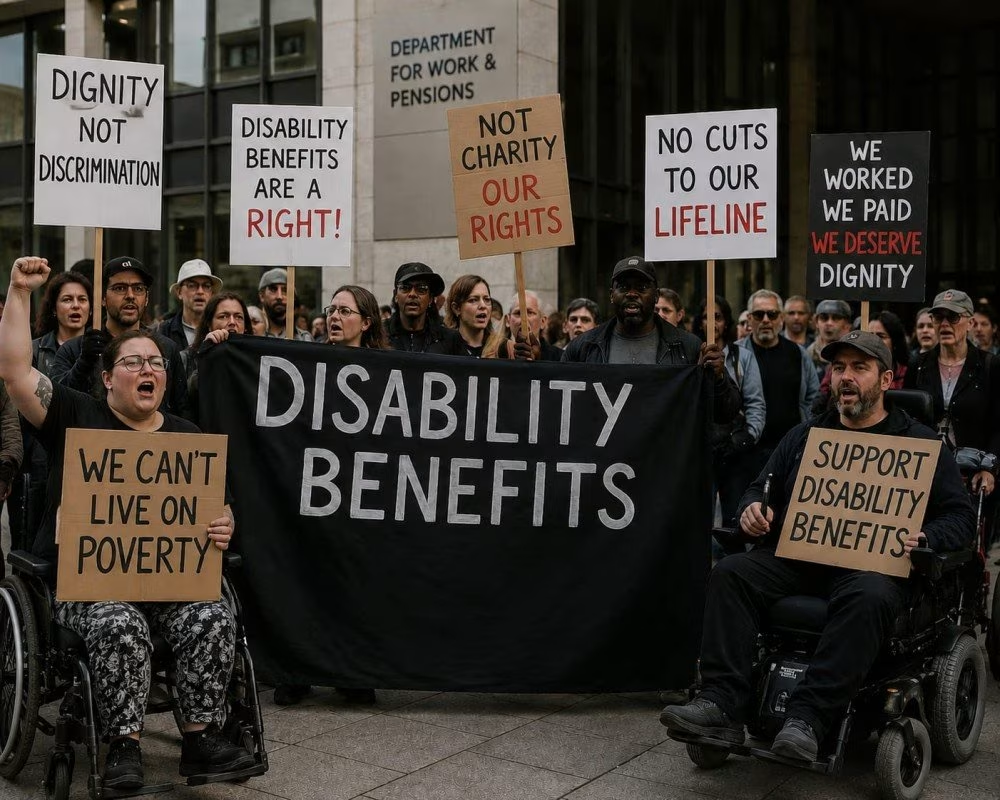
The Department for Work and Pensions (DWP) has been thrust into the spotlight, tasked with navigating the delicate balance of providing necessary support while ensuring that the system is not exploited. Critics argue that the current framework is not sufficiently robust, precipitating a system that may inadvertently encourage dependency rather than empowerment. In contrast, many advocates for mental health reform insist on the necessity of eliminating bureaucratic red tape, thus allowing quicker access to support for those in need. This duality raises a question about the most effective path forward: how to create a system that adequately supports individuals while promoting a culture of independence and resilience.
Furthermore, the implications of this surge in claims reach beyond individual circumstances; they resonate at the heart of our economic landscape. The rising incidence of disability claims may signal an insidious threat to productivity within the workforce. Companies increasingly find themselves grappling with the challenges posed by employees suffering from mental health issues, which can lead to absenteeism and diminished output. In the long-term, this represents a worrying trend that could stymie economic growth and innovation, further complicating the already intricate relationship between health and the economy.
In light of these challenges, the government has initiated several programmes aimed at addressing mental health care and support for claimants. There is an evident push to redefine how mental health is perceived and treated within the realms of both welfare and public health. Policies focusing on early intervention, increased funding for mental health services, and educational campaigns seeking to dismantle stigma are gaining traction. However, implementation remains uneven, with anxiety regarding how these measures will translate into real, tangible improvements for those affected persisting across various sectors of society.
The economic argument for addressing mental health issues cannot be overstated. It poses a critical challenge: how can the UK harness the potential of its workforce while ensuring that those suffering from mental issues are provided with the tools necessary for recovery? This question is at the forefront of policymakers’ minds and must be answered with urgency and care.
As the narrative surrounding disability and mental health continues to unfold, the experiences of those living with these conditions must remain central to the conversation. Voices from advocacy groups have stressed the importance of understanding the individual stories and backgrounds of those who are now navigating the benefits system, urging the government to consider both qualitative and quantitative data when shaping its response to the crisis.
For many, the process of applying for disability benefits can be fraught with emotion and uncertainty. A growing number of individuals recount experiences that speak to the obstacles faced in articulating their struggles to officials, often leaving them feeling invalidated or dismissed. This sharpens the focus on the need for comprehensive training for assessors, aimed at fostering genuine understanding of mental health issues rather than a box-ticking exercise that fails to encapsulate the complexity of human experience.
The rise in disability claims is not merely a statistic; it is a mirror reflecting the societal challenges we face, particularly in the realm of mental health. As awareness increases, so too does the imperative for society to evolve its approach to mental health care and disability. While the road ahead is fraught with difficulties, the potential to foster a more inclusive, understanding, and compassionate society is both essential and attainable.
The figures published by the DWP have ignited a broader societal discourse regarding the adequacy of support systems in place—a discourse that must be sustained if meaningful progress is to be made. Addressing mental health disparities entails more than merely expanding eligibility for benefits; it calls for a holistic re-evaluation of how society engages with these issues.
Both the government and healthcare providers must collaborate to ensure that mental health care becomes an integral component of public health policy. Resources should be allocated not just for the treatment of mental illness, but also for prevention and education. An informed public is essential for dismantling stigma; the more we talk about mental health in a holistic context, the more we normalise the conversation around it. As we continue to witness rising numbers in disability claims, let that serve not as an endpoint but as a catalyst for change.
Currently, the pressing demand for pragmatic solutions remains. As stakeholders across all sectors grapple with the implications of these figures, there is a collective acknowledgement that mental health cannot be relegated to a secondary concern. With each new claim, an opportunity arises—not only to extend support to those in need but also to reshape the narrative that surrounds mental health and disability in this country.
It is a multifaceted challenge that requires input from all corners of society, including government agencies, healthcare providers, community organisations, and, crucially, those who are living with these conditions. By forging a united front against the stigma and misunderstanding that has long surrounded mental health, there exists the possibility of building a more just and equitable system—one that not only supports individuals but also enriches society as a whole.
In this era of increased awareness and rising claims, the onus is on all of us to ensure that this dialogue leads to substantive change. The growth in disability claims serves not merely as a statistic but as a call to action—a reminder that mental health is a cornerstone of public health and societal wellbeing, and as such, it must be treated with the seriousness it deserves.
Post Disclaimer
The following content has been published by Stockmark.IT. All information utilised in the creation of this communication has been gathered from publicly available sources that we consider reliable. Nevertheless, we cannot guarantee the accuracy or completeness of this communication.
This communication is intended solely for informational purposes and should not be construed as an offer, recommendation, solicitation, inducement, or invitation by or on behalf of the Company or any affiliates to engage in any investment activities. The opinions and views expressed by the authors are their own and do not necessarily reflect those of the Company, its affiliates, or any other third party.
The services and products mentioned in this communication may not be suitable for all recipients, by continuing to read this website and its content you agree to the terms of this disclaimer.
Related Posts


Previous Post
Next Post

