
Now Reading: Toyota Halts Development of Luxury Electric Lexus Amidst Flagging Demand
-
01
Toyota Halts Development of Luxury Electric Lexus Amidst Flagging Demand
Toyota Halts Development of Luxury Electric Lexus Amidst Flagging Demand
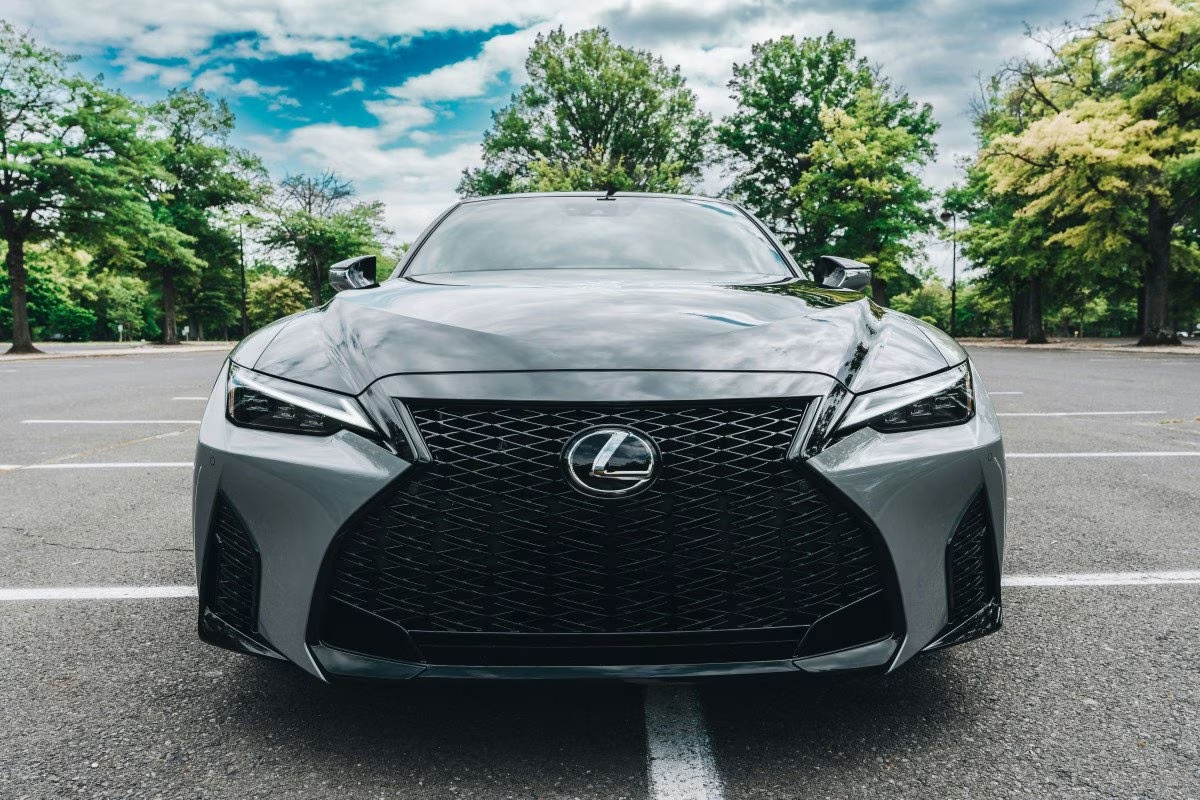
In a significant shift within the automotive landscape, Toyota has announced the discontinuation of its next-generation electric vehicle, the Lexus LF-ZC, a decision driven primarily by what the company describes as weak consumer demand. This announcement, which arrives shortly after a notable backlash against the first all-electric offering from Ferrari, casts a shadow over the luxury electric vehicle sector, raising questions about the viability of high-end zero-emission cars amidst evolving market dynamics.
The Lexus LF-ZC, hailed by Toyota as a potential leader in electric vehicle innovation, was first unveiled at the Tokyo Motor Show three years ago, generating buzz for its advanced manufacturing technologies and promising enhanced battery performance, including longer ranges and quicker charging capabilities. Toyota initially slated the vehicle’s launch for 2026, a target subsequently revised to mid-2027. However, the latest announcement signals a decisively different course, reflecting both a strategic realignment and an unsettling response to market realities.
Recent statements from Toyota highlight the company’s reluctance to proceed in light of dwindling demand in key markets, particularly in the United States, where the withdrawal of zero-emission subsidies under the Trump administration has reshaped the landscape for electric vehicles. This move is indicative of Toyota’s broader struggle to reconcile its historical focus on hybrid technology with the growing urgency to pivot towards full electrification. The automaker, long regarded as a pioneer in the hybrid space with its flagship Prius model, faces scrutiny regarding its commitment to zero-emission alternatives amidst the ongoing regulatory pressures and competitive advancements in electric technology.
The decision to pull the plug on the Lexus LF-ZC reflects broader currents within the luxury automotive sector, where the appetite for electric vehicles among premium consumers appears uncertain. The recent introduction of Ferrari’s Luce—the celebrated Italian marque’s inaugural entry into the electric market—has been met with skepticism, partly due to its staggering price tag of €550,000 and the cultural implications of altering a brand synonymous with high-performance combustion engines. Questions linger as to whether consumers will accept the trade-offs of electrification, particularly in luxury segments where the sensory experience of driving has historically been paramount.
This context sets the stage for a broader conversation about the dichotomy in consumer preferences. The successful sale of high carbon-emitting models continues to dominate market performance, as illustrated by Rolls-Royce’s struggles to sell its all-electric Spectre compared to the more traditionally conceived Cullinan. The luxury market appears to be at an impasse, grappling with the tension between environmental mandates and consumer desires for performance and heritage.
The vicissitudes facing companies like Jaguar Land Rover and Aston Martin further exemplify the growing chasm between intent and reality in the sector. Both manufacturers have either scaled back their electric commitments or delayed offerings, awaiting clearer signals from consumers about their readiness to embrace an electric future. Such recalibrations speak not only to operational considerations but also to a deeper, more psychological hesitation amongst affluent buyers who have historically prized the visceral thrill of internal combustion engines.
As the automotive industry undergoes this tumultuous transition, it remains crucial for manufacturers to navigate a dual path: appealing to the desires of a luxury clientele while also embracing the inevitable shift towards sustainable practices. The reluctance of several high-end brands to fully commit to electric technology indicates not only a prudential response to current market conditions but also an acknowledgment of the formidable task ahead in winning over discerning customers resistant to change.
The broader implications of Toyota’s decision reverberate beyond just its own brand, sparking deeper questions regarding the sustainability of the electric vehicle market, particularly in its upper echelon. The hesitation permeating the sector reflects not just a momentary lapse in consumer enthusiasm but possibly a more profound, enduring challenge as the luxury automotive industry strives for a new identity in an increasingly eco-conscious era.
Ultimately, the conundrum facing luxury electric vehicles lies in reconciling tradition with innovation, cutting-edge technology with the timeless allure of high-performance driving. As manufacturers like Toyota reassess their electric aspirations amidst shifting consumer landscapes, it becomes evident that the road to a sustainable automotive future is fraught with complexities that extend well beyond mere technological advancement.
Post Disclaimer
The following content has been published by Stockmark.IT. All information utilised in the creation of this communication has been gathered from publicly available sources that we consider reliable. Nevertheless, we cannot guarantee the accuracy or completeness of this communication.
This communication is intended solely for informational purposes and should not be construed as an offer, recommendation, solicitation, inducement, or invitation by or on behalf of the Company or any affiliates to engage in any investment activities. The opinions and views expressed by the authors are their own and do not necessarily reflect those of the Company, its affiliates, or any other third party.
The services and products mentioned in this communication may not be suitable for all recipients, by continuing to read this website and its content you agree to the terms of this disclaimer.
Related Posts


Previous Post
Next Post

